The short answer
For most adults, yes, as a short-term rescue. Dulcolax (bisacodyl) and senna are stimulant laxatives with no listed interaction with semaglutide or tirzepatide. Their labels say to ask a doctor first if you have stomach pain, nausea or vomiting, common on a GLP-1, and to stop and ask if you need a laxative for more than a week.
At GLP-1 SOS this question usually arrives on day four without a bowel movement, with a box of Dulcolax already in hand. Here is what the labels and the gastroenterology guideline say about stimulant laxatives, where they fit on a GLP-1, and when to call instead.
At a glance
Three things to know
1
A rescue, not a routine
Stimulants make the colon contract. Labels allow one week without a doctor; the guideline says short-term or rescue.
2
Check for red flags first
Belly pain, nausea or vomiting means ask a doctor before use, per the Drug Facts.
3
No listed interaction
The GLP-1 labels do not list bisacodyl or senna. The real risks are cramps, diarrhea and lost fluid.
What is actually happening
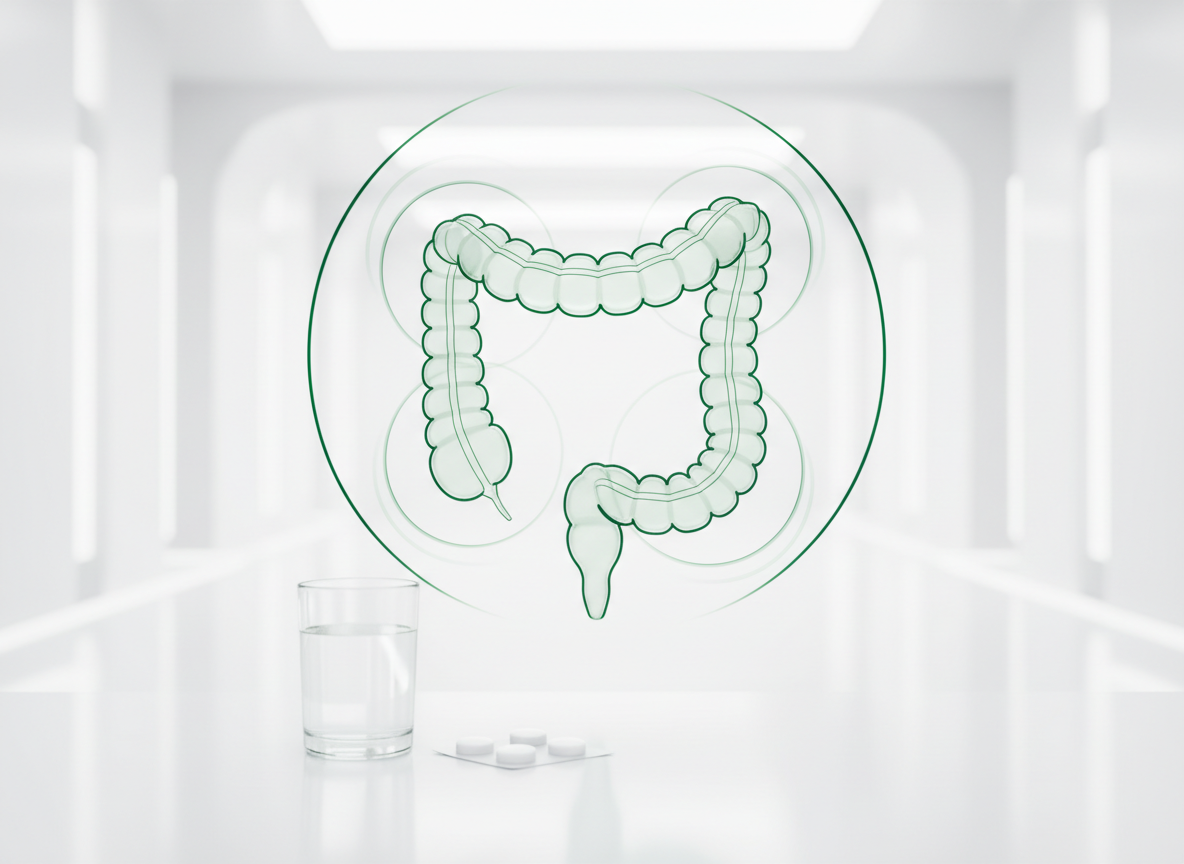
A GLP-1 slows how fast the stomach empties, and constipation is among the most common reactions: 24 percent of adults on Wegovy injection reported it in trials, against 11 percent on placebo. There are two families of over-the-counter laxatives. Osmotic laxatives such as MiraLAX hold water in the stool. Stimulant laxatives, bisacodyl (Dulcolax tablets) and senna (Senokot), make the bowel muscle contract. They work faster, usually within 6 to 12 hours for tablets, and they push rather than soften.
Lab note
Osmotics soften. Stimulants push. Push only when softening has had its chance.
The 2023 guideline from the American Gastroenterological Association and the American College of Gastroenterology gives bisacodyl a strong recommendation for short-term use, four weeks or less, or as rescue. Senna gets a conditional recommendation on low-certainty evidence. At a 10 mg starting dose of bisacodyl, 53 percent of trial participants had diarrhea and 25 percent abdominal pain, so the guideline suggests starting low. NIH says stimulants are for constipation that is severe or has not responded to other treatments.
On a GLP-1, two things deserve attention. The Drug Facts say to ask a doctor before use if you have stomach pain, nausea or vomiting. And the GLP-1 labels warn that fluid lost through vomiting or diarrhea can lead to kidney injury, so laxative diarrhea needs fluids alongside. The labels also list rare reports of severe constipation, ileus and intestinal obstruction: pain with no stool and no gas is a call, not a dose.
From the labels and guideline
The numbers to know
6 to 12 hours
how long Dulcolax tablets and Senokot usually take to work, per their Drug Facts labels
1 week
the limit for laxative use without a doctor, per the Drug Facts labels
53% vs 2%
diarrhea on bisacodyl 10 mg versus placebo in the trial behind the 2023 AGA-ACG guideline
Sources: Dulcolax and Senokot Drug Facts, DailyMed; Gastroenterology, 2023.
How to use one safely
- Check for red flags before you take it. Belly pain, nausea or vomiting means ask your doctor first, as the Drug Facts say. Severe pain, no gas, a swollen belly or more than five days without a bowel movement means call today instead of reaching for the box.
- Start low, at bedtime. Use the low end of the Drug Facts range. The guideline notes 5 mg of bisacodyl, one Dulcolax tablet, is often used first, and Senokot directions suggest bedtime so the effect lands the next day.
- Take it the right way. Swallow bisacodyl whole with a glass of water, and not within an hour of milk or an antacid, per its label. On the Wegovy pill or Rybelsus, keep it out of the morning 30-minute window explained in how to take the Wegovy pill or Rybelsus.
- Give it 6 to 12 hours, and do not stack doses. If nothing happens, do not take more. MedlinePlus advises stopping and talking to your doctor if a stimulant laxative does not produce a bowel movement.
- Replace the fluid. Cramping and loose stool are common. Sip water through the next day, because the GLP-1 labels warn that fluid lost through the gut can strain the kidneys.
- Keep it to rescue, and fix the base. No more than a week without your doctor. If you need rescue often, the daily plan needs work: liquid on a schedule, fiber, a walk and a gentle osmotic, as set out in how to prevent constipation before it starts.

From our support desk at GLP-1 SOS
If you wrote to us tonight about this, here is what we would say.
For a stuck night, a pharmacy stimulant used as the box says is reasonable for most adults, after a word with your prescriber if you have pain, nausea or vomiting. What we would not do is make it a habit. We built GLP-1 SOS Daily Gut Relief for the days in between: 250 mg of magnesium as citrate and oxide, ginger, peppermint and a 19-strain probiotic blend, 2 capsules with dinner, designed to support regular bowel movements with no stimulant laxatives in it.* Do not stack it with another magnesium laxative or MiraLAX without asking. If you prefer no product, liquid on a schedule and a walk after dinner come first.
We answer real questions from real people every day. Write to us if yours is not here.
*GLP-1 SOS Daily Gut Relief supports regular bowel movements and digestive comfort. These statements have not been evaluated by the Food and Drug Administration. This product is not intended to diagnose, treat, cure or prevent any disease.
Two kinds
A rescue night, or a phone call
Reasonable rescue
- Three or four days without a bowel movement
- Hard stool, no pain beyond mild discomfort
- Passing gas normally
- No vomiting, no fever
Call instead
- Constant or severe belly pain
- Vomiting, or no gas passing
- Swollen, hard belly
- Rectal bleeding, or no result after the laxative
A stimulant answers a slow colon. It does not answer pain.
When to call your doctor
Call your prescriber the same day if:
- You have constant or severe belly pain, or pain that spreads to your back
- You are vomiting or cannot pass gas
- Your belly is swollen and hard
- You see blood in your stool or bleeding from your rectum
- A laxative produced no bowel movement
- You go more than five days without a bowel movement
A stimulant is for a slow colon. Pain, vomiting or no gas is a call, not a second dose.

From the people behind the Lab
You do not have to figure this out alone.
GLP-1 SOS is the daily companion made for life on a GLP-1. Plain answers like this one, a support team that replies to real questions from real people, and daily formulas like GLP-1 SOS Daily Gut Relief, designed around the side effects that come with the medication. The GLP-1 Lab is our free education arm: no login, no paywall, no hype. Side effects are part of the road. Suffering through them is not.
Questions people also ask
Is it safe to take Dulcolax on Ozempic or Wegovy?
For most adults, as a short-term rescue, yes. Bisacodyl has no listed interaction with semaglutide. Its label says to ask a doctor first if you have stomach pain, nausea or vomiting, and to stop and ask if you need a laxative for more than a week. Start low at bedtime, drink extra water the next day, and call if you have pain or no gas.
Can I take senna every day on Mounjaro or Zepbound?
Not without your doctor. The Senokot label limits use to one week unless a doctor directs otherwise, and MedlinePlus notes that older adults should not usually take senna long term. The gastroenterology guideline gives senna only a conditional recommendation. If you need help every week, ask your prescriber about a daily osmotic routine instead.
Which is better for GLP-1 constipation, MiraLAX or Dulcolax?
They do different jobs. MiraLAX is an osmotic that softens stool and suits a steady routine, with a strong recommendation in the 2023 guideline. Dulcolax is a stimulant that pushes, recommended for short-term or rescue use. Many people use an osmotic as the base and a stimulant for the occasional stuck night. See also magnesium citrate on a GLP-1.
How long does Dulcolax take to work on a GLP-1?
The tablets usually work in 6 to 12 hours, per the Drug Facts label, which is why bedtime is the usual choice. The suppository works faster, typically within an hour. If nothing happens after a dose, do not take another; MedlinePlus advises talking to your doctor, and on a GLP-1 that call matters more with pain, bloating or no gas.
Can I take a stimulant laxative with the Wegovy pill or Rybelsus?
Yes, with timing. Nothing else should go in during the 30 minutes after your semaglutide tablet, including other pills, per the tablet labels. MedlinePlus also advises taking certain senna products two hours apart from other oral medicines. Bedtime dosing keeps a stimulant well clear of a morning tablet. Ask your pharmacist if you take several medicines.
Sources (7)
- Dulcolax Stimulant Laxative (bisacodyl) tablets, Drug Facts label. DailyMed, U.S. National Library of Medicine.
- Senokot (sennosides) tablets, Drug Facts label. DailyMed, U.S. National Library of Medicine.
- Senna. MedlinePlus Drug Information, National Library of Medicine.
- Bisacodyl. MedlinePlus Drug Information, National Library of Medicine.
- American Gastroenterological Association-American College of Gastroenterology Clinical Practice Guideline: Pharmacological Management of Chronic Idiopathic Constipation. Gastroenterology, 2023.
- Treatment for Constipation. NIH National Institute of Diabetes and Digestive and Kidney Diseases (NIDDK).
- Wegovy (semaglutide) injection and tablets, Prescribing Information. Novo Nordisk / FDA, revised June 2026.
Reviewed by the GLP-1 SOS editorial team · Education, not medical advice · Talk to your prescriber about your dose and your symptoms.