The short answer
Once, after a meal that was too big or too greasy for a slowed stomach, is common and usually settles by the next day. Vomiting more than once, vomiting that stops you keeping liquids down, or vomiting with severe or persistent belly pain is a same-day call. The labels warn about dehydration and the kidneys for a reason.
Vomiting is the message that worries people most when they write to GLP-1 SOS, and the answer turns on one thing: once after a meal, or more than once. We wrote this to help you tell them apart tonight.
Two kinds
Usually the slow stomach, or a same-day call
Usually the slow stomach
- Once, after a large or greasy meal
- Settles with rest and small sips
- Liquids stay down within an hour
- No belly pain once it passes
- Lands on shot day or the day after
- Eases within days of a dose step
Same-day call
- More than once in twenty-four hours
- Cannot keep liquids down
- Faint on standing, very little urine
- Severe or lasting belly pain, vomiting or not
- Pain under the right ribs or into the back
- Fever, blood, or coffee-ground vomit
Pain is the line. A stomach that sent dinner back does not hurt afterward.
What is actually happening
A GLP-1 medication slows how fast your stomach empties, and all four labels list vomiting as a common reaction. In the Wegovy trials in adults, about one in four reported vomiting, against about six in a hundred on placebo. On Zepbound it was roughly one in ten, and on Ozempic and Mounjaro fewer than one in ten at most doses. It clustered in the first weeks and after dose increases.
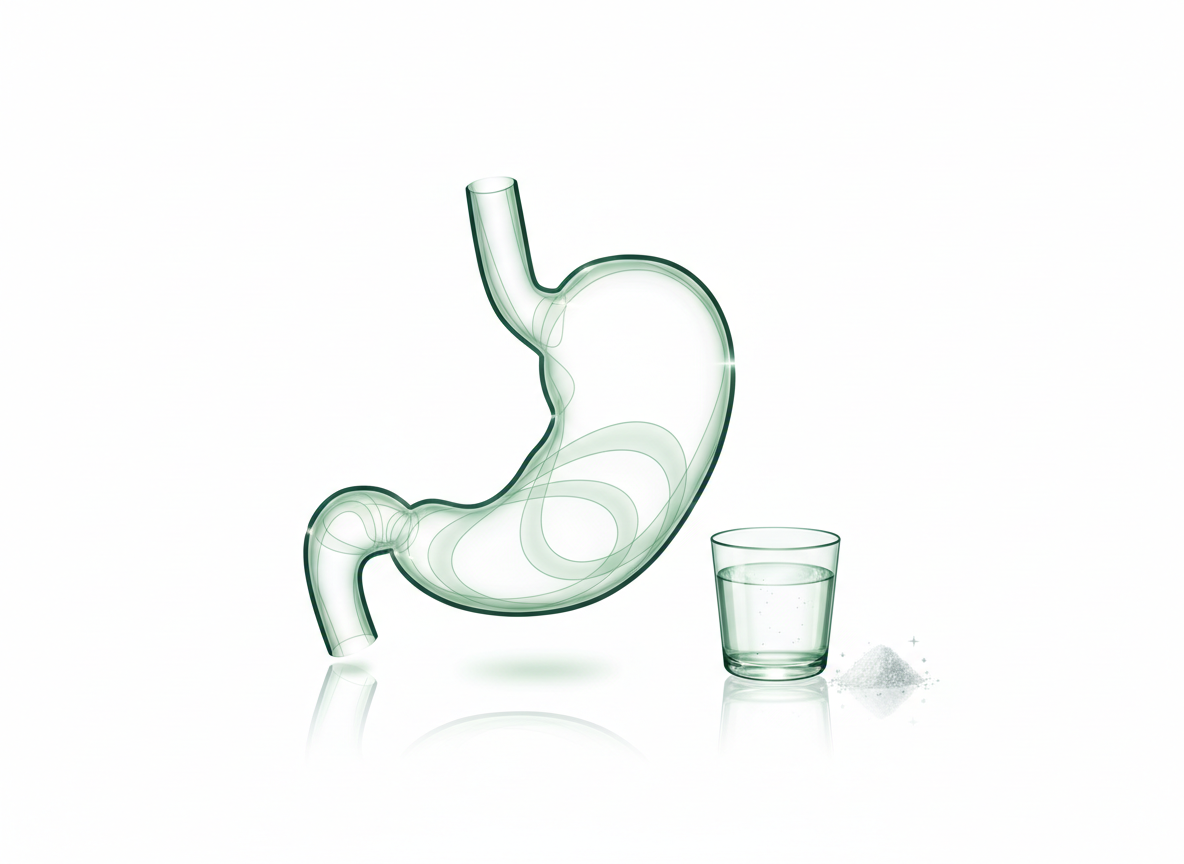
The stomach is a bag with a slow exit. A meal that fits and leaves at the new pace sits quietly. A meal that is too large, too fatty, or eaten too fast raises pressure in a stomach that cannot pass it forward, and the body’s answer to a full stomach that will not empty is to send it back. Fat slows emptying further, which is why greasy takeout is so often the meal that comes back. One episode with a meal to blame is the threshold. Repeated vomiting, or vomiting with no meal behind it, is a different signal.
Lab note
A full, slow stomach sends back what does not fit.
The labels take repeated vomiting seriously for two reasons. The first is water. Vomiting removes water and salt together, and if sips will not stay down there is no way to put them back. All four labels warn about acute kidney injury: most reported cases were in people whose nausea, vomiting or diarrhea had led to dehydration, and prescribers are told to watch kidney function during dose steps.
The second is pain. The labels describe acute pancreatitis as persistent or severe abdominal pain, sometimes radiating to the back, with or without nausea or vomiting. They also report gallstones more often on the medication than on placebo, and note that rapid weight loss raises that risk on its own. Gallbladder pain sits under the right ribs, often after a heavy meal. Pain is what separates a stomach that sent back dinner from a problem that needs a doctor.
After it happens
Rest, sips, small plate, normal plate
1
Rest the stomach
Nothing solid for two to four hours. Let it settle before anything goes back in.
2
Salted sips
A tablespoon of broth, water with a pinch of salt, or an electrolyte mix every few minutes for an hour.
3
A small plate
Crackers, rice, toast, a banana, a boiled egg. A few bites, then stop at the first sign of fullness.
4
Back to normal, slowly
Small, low-fat meals every three to four hours the next day. The old portion is what caused it.
What to do
- Rest the stomach first. Nothing solid for two to four hours after vomiting. A stomach that just emptied itself needs to settle, not to be refilled.
- Start with salted sips. A tablespoon of water, broth, or a sugar-free electrolyte mix every few minutes, not a glass at once. Vomiting takes salt with the water, and water follows salt. Hold liquids for an hour before moving up.
- Restart with a small plate. Once liquids stay down, a few bites of something plain: crackers, rice, a banana, toast, a boiled egg. Stop at the first sign of fullness.
- Keep the next day small. Something small every three to four hours, low in fat, protein first, no alcohol. A stomach that sent one meal back will send another if it is refilled at the old pace.
- Find the meal that did it. Write down what you ate in the hours before, and how much. If it was large, greasy, or eaten fast, that is the threshold, and the fix is the portion.
- Eat slower than feels natural. Put the fork down between bites, aim for twenty minutes per meal, and stop at satisfied. On a slow stomach, fullness arrives late, after the food is already in.
- Bring a pattern to your prescriber. If you vomited more than once in a day, or on every shot week, note the days and the dose step. The labels give prescribers room to delay a dose step when a dose is not tolerated; that is their call, and the log makes it an easy one.

From our support desk at GLP-1 SOS
If you wrote to us tonight after throwing up, here is what we would say.
First, the line: if you have vomited more than once today, cannot keep liquids down, feel faint, or have belly pain that will not settle, call your prescriber today, not us. If it was once, after a meal that was bigger or greasier than your stomach can pass right now, rest it for a few hours, then salted sips by the tablespoon, then a few plain bites once an hour of liquids has stayed down. Keep tomorrow small and low in fat, and write down what the meal was. That meal is the answer. If it happens again on the next shot week, bring both dates to your prescriber; delaying a dose step is written into the labels as an option, and it is theirs to make.
We answer real questions from real people every day. Write to us if yours is not here.
When to call your doctor
Call your prescriber the same day if:
- You have vomited more than once in twenty-four hours
- You cannot keep liquids down
- You feel faint when you stand or are passing very little urine
- There is severe or persistent belly pain, with or without vomiting, especially pain that goes through to your back
- There is pain under your right ribs after eating
- You have a fever
- There is blood or something that looks like coffee grounds in the vomit
Once after a heavy meal is normal. Repeated, or with pain, is not.

From the people behind the Lab
You do not have to figure this out alone.
GLP-1 SOS is the daily companion made for life on a GLP-1. Plain answers like this one, a support team that replies to real questions from real people, and daily formulas like GLP-1 SOS Daily Gut Relief, designed around the side effects that come with the medication. The GLP-1 Lab is our free education arm: no login, no paywall, no hype. Side effects are part of the road. Suffering through them is not.
Questions people also ask
Is it normal to throw up on Ozempic or Wegovy?
Once in a while, yes, and usually with a meal to blame. Vomiting was reported by about one in four adults in the Wegovy trials and by fewer on Ozempic, most often in the first weeks and after a dose increase. The usual story is a meal that was too large or too greasy for a stomach that now empties slowly. Vomiting more than once in a day, or without a meal behind it, is worth a same-day call.
How many times is too many to vomit on a GLP-1?
More than once in twenty-four hours, or any vomiting that stops you keeping liquids down, is the line the labels draw around dehydration. The kidney warning in the prescribing information exists because water and salt leave together when you vomit and cannot be replaced if sips come back up. One episode that settles with rest and small sips is a limit. Two, or a dry mouth and dizziness, is a call.
What should I eat after vomiting on a GLP-1?
Nothing for two to four hours, then salted liquids in tablespoon sips: broth, water with a pinch of salt, a sugar-free electrolyte mix. Once an hour of liquids has stayed down, a few bites of something plain and low in fat, such as crackers, rice, toast, a banana or a boiled egg. Keep the next day to small, low-fat meals every three to four hours, and leave alcohol out.
Does vomiting mean my dose is too high?
Not by itself. Vomiting clusters around the first higher shot of each dose step, when the medication level is at its peak and the stomach is at its slowest, and it usually eases within a couple of weeks as the level evens out. If it repeats on every shot week, or has not settled after two weeks on a new dose, the prescribing information allows prescribers to delay the next step. Bring them the dates and let them decide.
Sources (6)
- Wegovy (semaglutide) injection, Prescribing Information. Novo Nordisk / FDA, revised June 2026.
- Zepbound (tirzepatide) injection, Prescribing Information. Eli Lilly, revised August 2026.
- Ozempic (semaglutide) injection, Prescribing Information. Novo Nordisk, revised May 2026.
- Mounjaro (tirzepatide) injection, Prescribing Information. Eli Lilly, revised August 2026.
- Symptoms & Causes of Gallstones. NIH National Institute of Diabetes and Digestive and Kidney Diseases (NIDDK), accessed September 2026.
- GLP1 and GIP Receptor Agonists: Effects on the Gastrointestinal Tract and Management Strategies for Primary Care Physicians. Mayo Clinic Proceedings, 2025.
Reviewed by the GLP-1 SOS editorial team · Education, not medical advice · Talk to your prescriber about your dose and your symptoms.