The short answer
Because the level is still climbing. Semaglutide reaches its peak one to three days after the shot; tirzepatide peaks between eight and seventy-two hours, typically around a day. The stomach is slowest in that window, not at the moment of injection, and the first higher shot of each dose step is the strongest version.
At GLP-1 SOS the question arrives every week in the same words: why is Tuesday worse than Monday when the shot was Monday? We map the curve below so you can plan your week around it.
The weekly curve
Shot, peak days, settles
1
Shot day
The medication is absorbed slowly from under the skin. The level starts to climb; the stomach has not slowed yet.
2
Peak days
Semaglutide peaks one to three days later, tirzepatide within about a day. The stomach is at its slowest here.
3
Settles
The level falls toward the next shot. Four weeks on a dose and the swing narrows; the week evens out.
What is actually happening
A once-weekly GLP-1 is absorbed slowly from under the skin, so the shot is the start of the curve, not the top of it. The Wegovy and Ozempic prescribing information state that maximum concentration of semaglutide is reached one to three days after the dose. For tirzepatide, the Zepbound label gives a median of twenty-four hours with a range of eight to seventy-two, and Mounjaro’s states the same range. The medication slows how fast your stomach empties, and it does so in proportion to the level, so the stomach is at its slowest the day after the shot.
Lab note
The shot is day one. Your stomach’s day one is tomorrow.
The curve also explains why the first shot of a new dose is the hard one. Semaglutide has a half-life of about a week and tirzepatide of about five days, so each shot lands on top of what is left from the last. Over the first four weeks on a dose, both the peak and the trough rise until they level off; the Zepbound label puts steady state at four weeks. The first higher shot is the largest jump the stomach has felt since the last step. By the fourth shot of the same dose, the peak sits only a little above the trough, and the week feels ordinary.
Nausea was the most common reaction on all four medications, reported by about four in ten adults on Wegovy against about one in six on placebo, and a 2022 analysis of the semaglutide trials found that gut reactions were mostly mild to moderate, transient, and most frequent during or shortly after dose escalation.
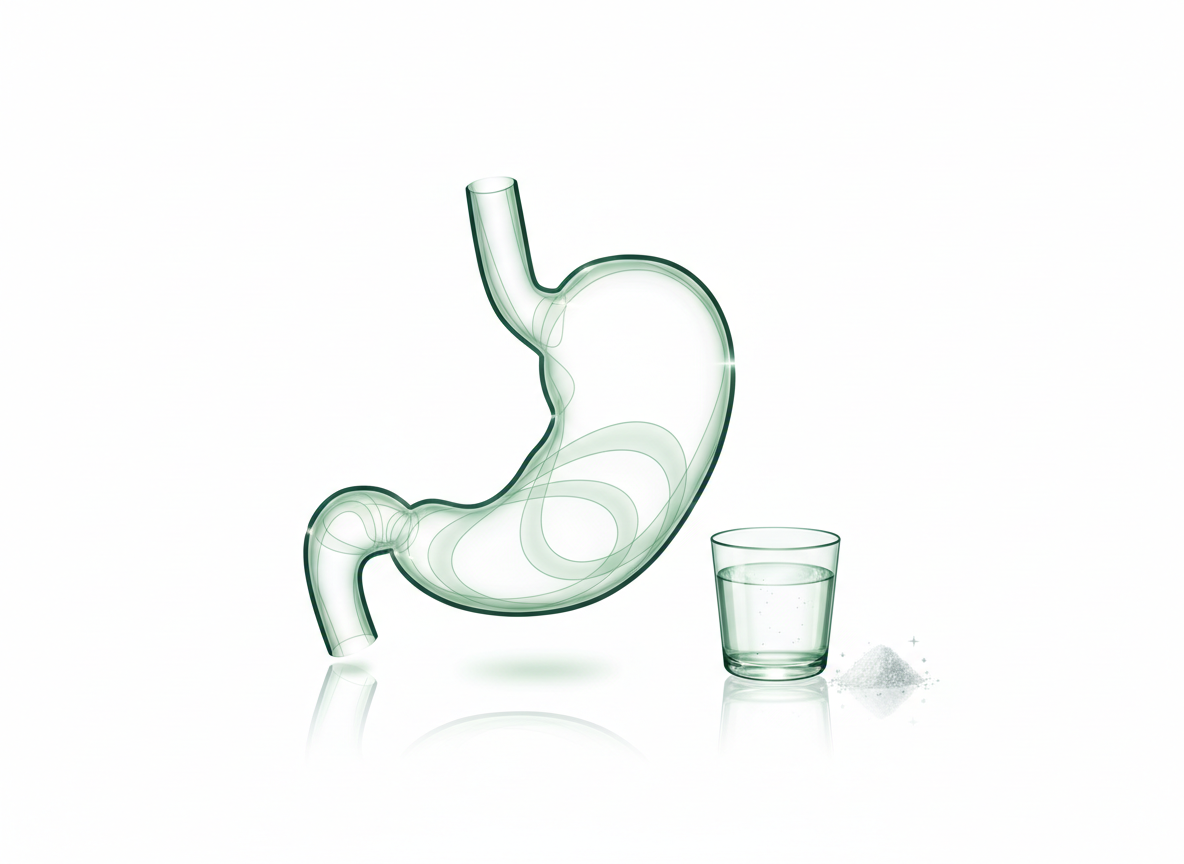
What it feels like from inside is a stomach that fills early. A meal that sat fine on day six sits heavily on day two, because there is less room and a slower exit. Fat, large portions and alcohol each slow emptying further, and on a peak day they stack on top of the medication.
Peak-day plate
What goes on the shot-day plate, and what stays off
Shot-day plate
- Something small every three to four hours
- Protein first: eggs, yogurt, chicken, fish
- Plain carbs: rice, toast, oats, a banana
- Broth or salted water in small sips
- Ginger or peppermint tea between meals
- Stop at satisfied, never full
Leave off until day four
- Fried and greasy food
- Cream sauces and cheese-heavy meals
- Large portions of anything
- Alcohol
- Big drinks with meals
- Eating fast or standing up
Half of the day-six portion is the right size for day two.
What to do
- Know your peak days. Mark the shot day and the two after it on a calendar. Those are the days to keep small, not the whole week.
- Time the shot to your week. Many people take it in the evening, or the day before a quiet day, so the peak lands on rest rather than on a work lunch. This is a habit people use, not a label instruction; the labels allow the day to be changed as long as a minimum gap between doses is kept, so confirm the gap with your prescriber or pharmacist before moving it.
- Eat small on peak days. Shot day and the day after: something small every three to four hours, protein first, stopping at satisfied. Half of what you would eat on day six.
- Leave off fat and alcohol. On peak days, fried, creamy and greasy meals and alcohol all slow the stomach further and land on top of the medication. Save them for the back half of the week, if at all.
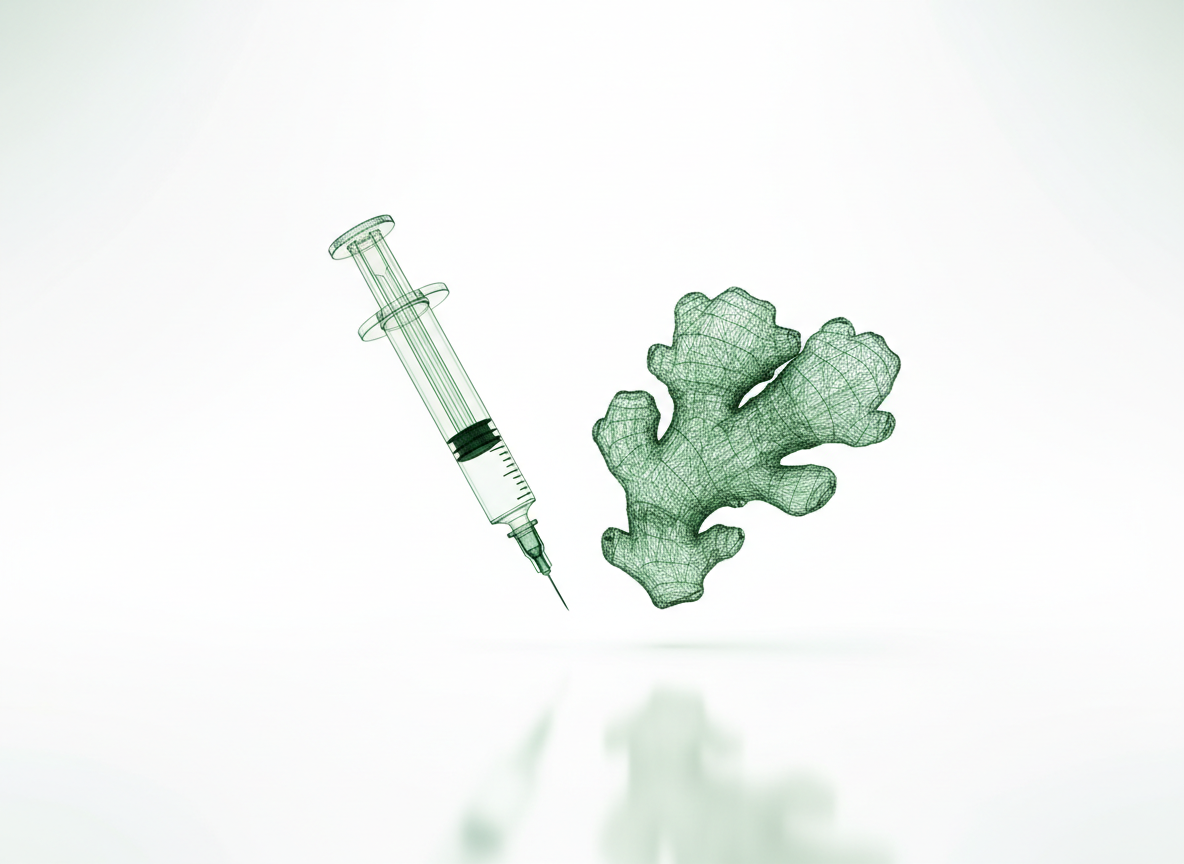
- Ginger and peppermint on peak days. Ginger settles a queasy stomach and peppermint eases the tight, gassy feeling. Ginger tea or ginger chews between meals, or a cup of peppermint tea, does the job on its own. Both are also in GLP-1 SOS Daily Gut Relief, 200 mg of ginger root and 50 mg of peppermint with dinner, alongside 250 mg of magnesium for the slow days that follow the peak, so the shot week needs one routine rather than a shelf of remedies.*
- Sip, do not gulp. Cold water, broth, or a sugar-free electrolyte mix in small amounts through the day, between meals rather than with them. A slow stomach handles a glass of water on top of a meal badly.
- Log the peak, then the trend. Note nausea on each day of the shot week for two cycles. If the shot week is still hard by the fourth shot of the same dose, bring the log to your prescriber. Staying longer on a dose is written into the labels as an option.
*GLP-1 SOS Daily Gut Relief supports regular bowel movements and digestive comfort. These statements have not been evaluated by the Food and Drug Administration. This product is not intended to diagnose, treat, cure or prevent any disease.
When to call your doctor
Call your prescriber the same day if:
- The nausea comes with vomiting more than once
- You cannot keep liquids down
- You feel faint when you stand
- There is severe or persistent belly pain, with or without vomiting
- The nausea has not eased at all by day four of the shot week
- Each shot is worse than the last
- You have a fever
Two queasy days is the curve. A queasy week that never lifts is not.

From the people behind the Lab
You do not have to figure this out alone.
GLP-1 SOS is the daily companion made for life on a GLP-1. Plain answers like this one, a support team that replies to real questions from real people, and daily formulas like GLP-1 SOS Daily Gut Relief, designed around the side effects that come with the medication. The GLP-1 Lab is our free education arm: no login, no paywall, no hype. Side effects are part of the road. Suffering through them is not.
Questions people also ask
Why do I feel sick the day after my Ozempic shot and not the day of?
Because the level is still rising. Semaglutide is absorbed slowly, and the prescribing information puts the peak at one to three days after the dose. The stomach slows in step with the level, so the day after the shot, and often the one after that, is when it empties slowest and fills fastest. The shot itself is the bottom of the curve.
Is it better to take Wegovy or Zepbound at night?
The labels do not name a time of day; they ask for the same day each week, with or without food. Many people choose the evening, or the day before a quiet day, so the peak lands on sleep and rest rather than on a full workday. If it helps you, it is a reasonable habit. Check the minimum gap between doses with your prescriber before moving the day.
How long does injection-day nausea last?
Usually the two or three days around the peak, then it fades as the level falls toward the next shot. Over the first four weeks on a dose the swing narrows, because each shot lands on more of the previous one, and by the fourth shot the week usually feels even. Nausea that fills the whole week, or gets worse with each shot, is worth a conversation with your prescriber.
Why is the first shot of a new dose the worst?
Because it is the largest jump your stomach has felt since the last step. On a steady dose, each shot adds only a little to what is left from the previous one. A higher dose raises the peak all at once, and it takes about four weeks for the levels to settle at the new height. The prescribing information lets prescribers delay a dose step when a dose is not tolerated; that is a normal thing to ask about.
Sources (6)
- Wegovy (semaglutide) injection, Prescribing Information. Novo Nordisk / FDA, revised June 2026.
- Zepbound (tirzepatide) injection, Prescribing Information. Eli Lilly, revised August 2026.
- Mounjaro (tirzepatide) injection, Prescribing Information. Eli Lilly, revised August 2026.
- Gastrointestinal tolerability of once-weekly semaglutide 2.4 mg in adults with overweight or obesity, and the relationship between gastrointestinal adverse events and weight loss. Diabetes, Obesity and Metabolism, 2022.
- Ginger: Usefulness and Safety. NIH National Center for Complementary and Integrative Health (NCCIH), accessed September 2026.
- Peppermint Oil: Usefulness and Safety. NIH National Center for Complementary and Integrative Health (NCCIH), accessed September 2026.
Reviewed by the GLP-1 SOS editorial team · Education, not medical advice · Talk to your prescriber about your dose and your symptoms.