The short answer
Usually because something changed, not because the medication stopped agreeing with you. The common causes are a dose increase, a missed dose followed by a restart, meals that have crept back up as appetite adapted, more fat or alcohol, or constipation backing up. Gallbladder symptoms as weight drops, or an unrelated stomach bug, are the ones to rule out.
At GLP-1 SOS we hear a version of this every week: months of calm, then the queasiness is back and nothing obvious changed. Something did. Here is how we look for it.
Three usual causes
Which one is yours
Dose or missed dose
The level jumped
Feels like: Week one again, worst on shot day and the day after
Check: A dose step or a missed shot in the last month
What helps: Small plates on peak days; tell your prescriber the dates
Shot-week pattern
Meals crept back
The plate grew
Feels like: Heavy and queasy after dinner, not after the shot
Check: Portion size, fat, alcohol, eating out
What helps: Month-one portions, protein first, stop at satisfied
Most common
Backed-up colon
The lower gut is full
Feels like: Bloated, full early, no appetite, queasy all day
Check: Days since your last bowel movement
What helps: Water, soluble fiber, steady evening magnesium, a walk
Often missed
What is actually happening
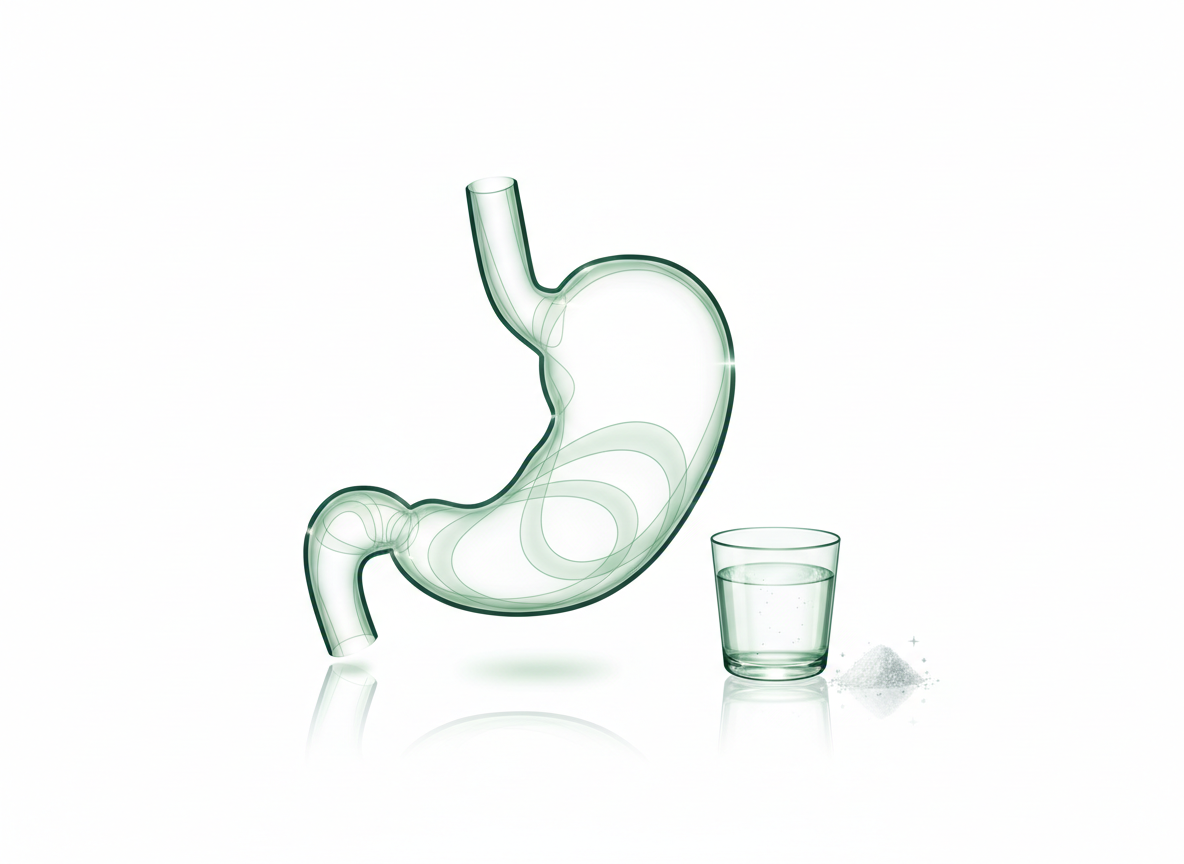
A GLP-1 medication slows how fast your stomach empties, and the stomach adapts. In the trials, nausea clustered in the first weeks and around dose increases, then faded on a steady dose. But it adapted to one level of the medication and one way of eating. Change either, and it notices again.
Lab note
The stomach adapted to a dose and a plate. Change either and it notices.
The level changes in two ways. A dose increase raises the peak for about four weeks before the new level settles, and the first higher shot is the strongest. A missed dose lets the level fall, so the next shot is a bigger jump than the stomach had settled into. The Wegovy label tells prescribers to restart escalation at a lower dose after two or more consecutive missed doses. The number of doses missed is what your prescriber needs from you.
The plate changes more quietly. In month one, appetite is so low that portions shrink without effort. By month three or four, appetite adapts, the plate grows back, and the stomach has not sped up. Same threshold, larger meal. Fat and alcohol each slow emptying further. This nausea arrives after dinners rather than after shots, which is the tell.
The colon can be the cause. A GLP-1 slows the colon as well as the stomach, and stool that sits for days leaves the lower gut full and distended. A full colon sends its message upward: bloating, early fullness, queasiness, sometimes no appetite. It is the cause people connect least.
Two causes have nothing to do with adaptation. A stomach bug arrives whenever it likes: watery diarrhea, cramping, nausea or vomiting, sometimes fever, usually under a week. The labels report gallstones more often on these medications than on placebo, and rapid weight loss raises the risk on its own. Gallbladder pain sits under the right ribs, often after a heavy meal or in the evening, and lasts hours. That is the red flag on this list.
Two kinds
Usually the medication, or something else
Usually the medication
- Started after a dose step or a missed shot
- Worse on shot day and the day after
- Worse after larger, fattier dinners
- Comes with bloating and days of no bowel movement
- Eases with smaller plates within days
Something else: call
- Pain under the right ribs, often after eating
- Severe or persistent belly pain, with or without vomiting
- Fever, or vomiting more than once
- Yellow skin or eyes, dark urine
- Watery diarrhea and cramps that started suddenly
Nausea that tracks meals is load. Nausea with pain under the ribs is a same-day call.
What to do
- Date the change. Write down when the nausea came back and what changed in the two weeks before it: a dose step, a missed shot, travel, a new medication, more meals out.
- Check when you last went. If it was three or more days ago, the colon is the likely cause. Water through the day, soluble fiber, a steady evening magnesium routine agreed with your prescriber, and a ten-minute walk after dinner.
- Measure the plate against month one. Picture the plate you ate then next to the one you eat now. If it has grown, go back to something small every three to four hours, protein first, stopping at satisfied.
- Cut fat and alcohol, one week. Both slow the stomach further, and both creep back as life gets normal. If the nausea lifts, you have found the cause.
- Check the calendar against the shot. Nausea on shot day and the day after is the curve. Nausea after dinners is the plate. Nausea every day, whatever you eat, is something else.
- Ginger and peppermint between meals. Ginger tea or chews settle a queasy stomach and peppermint eases the tight, gassy feeling. They help you through the queasy stretch; they are not a reason to stop looking for the cause.
- Bring the log to your prescriber. If the nausea has lasted more than two weeks with no change you can find, or follows a missed dose, that is their conversation. Restarting after missed doses and the pace of dose steps are their calls, and the labels give them room.

From our support desk at GLP-1 SOS
If you wrote to us saying the nausea came back after months of calm, here is what we would say.
First, the line: pain under your right ribs, pain that will not settle, fever, or vomiting you cannot stop is a same-day call to your prescriber, not to us. If it is the quieter version, two questions: when was your last bowel movement, and has the plate grown since month one? A backed-up colon is the cause people connect least; a steady evening routine of water, soluble fiber and magnesium usually clears it within days, which is why GLP-1 SOS Daily Gut Relief pairs 250 mg of magnesium with ginger and peppermint. Plain magnesium citrate and a cup of ginger tea do the same two jobs. Then check the plate, the fat and the alcohol, and if nothing changed or a shot was missed, bring the dates to your prescriber.
We answer real questions from real people every day. Write to us if yours is not here.
*GLP-1 SOS Daily Gut Relief supports regular bowel movements and digestive comfort. These statements have not been evaluated by the Food and Drug Administration. This product is not intended to diagnose, treat, cure or prevent any disease.
When to call your doctor
Call your prescriber the same day if:
- There is pain under your right ribs or in the upper belly, especially after eating or in the evening
- There is severe or persistent belly pain, with or without vomiting
- You have a fever
- You have vomited more than once
- You cannot keep liquids down
- Your skin or the whites of your eyes look yellow or your urine is dark
- You have gone more than five days without a bowel movement
Queasy after a bigger dinner is the medication. Pain under the ribs is not.

From the people behind the Lab
You do not have to figure this out alone.
GLP-1 SOS is the daily companion made for life on a GLP-1. Plain answers like this one, a support team that replies to real questions from real people, and daily formulas like GLP-1 SOS Daily Gut Relief, designed around the side effects that come with the medication. The GLP-1 Lab is our free education arm: no login, no paywall, no hype. Side effects are part of the road. Suffering through them is not.
Questions people also ask
Why am I suddenly nauseous on Ozempic after months?
Something changed. The usual suspects are a dose increase, a missed shot followed by a restart, a plate that has grown back as appetite adapted, more fat or alcohol, or a colon that has backed up. Each one raises the load on a stomach that still empties slowly. Date the change, count the days since your last bowel movement, and compare the plate to month one before assuming the medication itself is the problem.
Can constipation cause nausea on a GLP-1?
Yes, and it is one of the most common causes months in. The medication slows the colon as well as the stomach, and stool that sits for days leaves the lower gut full and distended. A full colon sends its message upward as bloating, early fullness and queasiness. Three or more days without a bowel movement is the clue. Water, soluble fiber, a steady evening routine and a walk after dinner usually clear it within days.
Why do I feel sick after missing a dose and restarting?
Because the level fell and then jumped. A missed dose lets the medication drop, so the next shot is a bigger step relative to what your stomach had settled into, the same mechanism as a dose increase. The Wegovy label instructs prescribers to restart escalation at a lower dose after two or more consecutive missed doses for exactly this reason. Tell your prescriber how many doses were missed and let them decide the restart.
Does nausea coming back mean the medication has stopped working?
No. Nausea tracks the stomach’s slowing, not the weight loss, and the 2022 semaglutide analysis found gut reactions contributed very little to the weight lost. Nausea returning usually means the load went up: a bigger plate, more fat, a missed shot, a backed-up colon. Find the change and reverse it. If nothing has changed and it lasts more than two weeks, bring the dates to your prescriber.
Sources (6)
- Wegovy (semaglutide) injection, Prescribing Information. Novo Nordisk / FDA, revised June 2026.
- Zepbound (tirzepatide) injection, Prescribing Information. Eli Lilly, revised August 2026.
- Gastrointestinal tolerability of once-weekly semaglutide 2.4 mg in adults with overweight or obesity, and the relationship between gastrointestinal adverse events and weight loss. Diabetes, Obesity and Metabolism, 2022.
- Clinical Recommendations to Manage Gastrointestinal Adverse Events in Patients Treated with GLP-1 Receptor Agonists: A Multidisciplinary Expert Consensus. Journal of Clinical Medicine, 2023.
- Symptoms & Causes of Gallstones. NIH National Institute of Diabetes and Digestive and Kidney Diseases (NIDDK), accessed September 2026.
- Symptoms & Causes of Viral Gastroenteritis (“Stomach Flu”). NIH National Institute of Diabetes and Digestive and Kidney Diseases (NIDDK), accessed September 2026.
Reviewed by the GLP-1 SOS editorial team · Education, not medical advice · Talk to your prescriber about your dose and your symptoms.