The short answer
For most adults, yes, for a short bout of diarrhea. No GLP-1 label lists loperamide (Imodium) as an interaction. Follow the box: 4 mg after the first loose stool, 2 mg after each one after that, never more than 8 mg in 24 hours, and stop after 2 days. Do not use it if you have a fever, blood or mucus in the stool, or black stools; call your doctor instead.
At GLP-1 SOS this question usually arrives the day after a dose step, often with a trip or a workday coming up. Loperamide is a reasonable tool for that moment, with real limits and two extra things to watch on a GLP-1: dehydration and the constipation that can follow. Why the medication loosens stool in the first place is in why a GLP-1 causes diarrhea.
At a glance
Three rules for Imodium on a GLP-1
1
Short bouts only
The box says to stop and call a doctor if diarrhea lasts more than 2 days. A bridge, not a habit.
2
Never above 8 mg a day
That is four 2 mg caplets in 24 hours. The FDA warns that much higher doses can cause serious heart rhythm problems.
3
Not with fever or blood
Bloody or black stools are a reason not to use it at all. Fever or mucus means ask a doctor first.
What is actually happening
Loose stools are one of the most common GLP-1 reactions. On the Wegovy label, 30 percent of adults on 2.4 mg reported diarrhea, against 16 percent on placebo; on Zepbound, 19 to 23 percent depending on the dose, against 8 percent. Both labels say most gut reactions happened while the dose was going up.
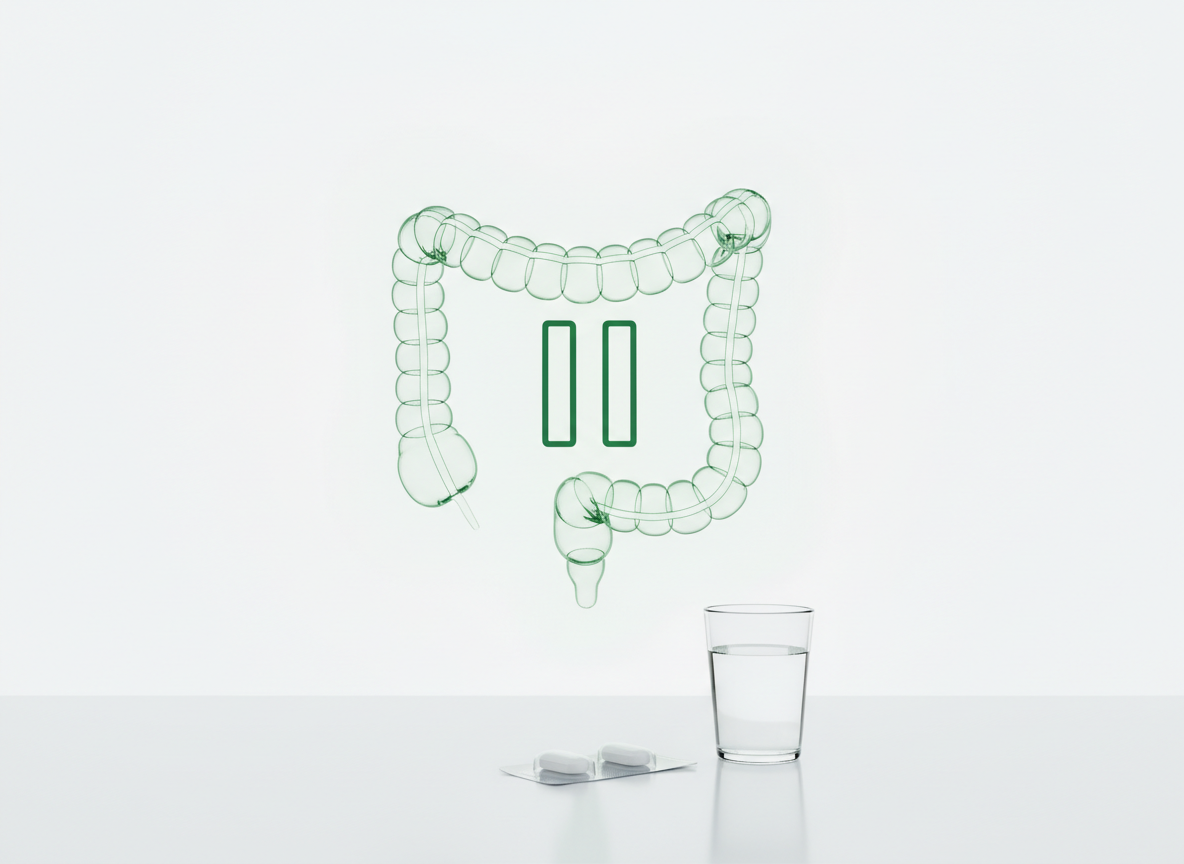
Loperamide acts on opioid receptors in the gut wall. It slows the intestines so more water is pulled back out of the stool, which means fewer and firmer bowel movements. It does not change how your GLP-1 works, and none of the seven GLP-1 labels we checked lists it as an interaction.
Lab note
Imodium is a brake. On a GLP-1, the gut already has one foot on it.
That is the catch. A GLP-1 already slows the stomach, and the labels list constipation as common and, in rare post-marketing reports, severe constipation, ileus and intestinal obstruction. A second brake kept on too long can turn a loose week into a blocked one. The other risk is fluid: the Wegovy and Zepbound labels warn that dehydration from diarrhea or vomiting has led to kidney injury.
From the labels and the FDA
Three numbers worth knowing
8 mg
the most loperamide an adult should take in 24 hours without a prescription: four 2 mg caplets, per the FDA and the Imodium A-D Drug Facts label
2 days
if diarrhea lasts longer than this while you take loperamide, stop and call your doctor, per the Drug Facts label and the FDA
30 in 100
adults on Wegovy 2.4 mg who reported diarrhea in the trials, against 16 in 100 on placebo, per the Wegovy label
Sources: FDA Drug Safety Communication on loperamide, January 2018; Imodium A-D Drug Facts label, DailyMed; Wegovy Prescribing Information, June 2026.
What to do
- Drink first, then decide on the pill. Water plus broth, a sports drink or an oral rehydration solution, in small sips through the day. With diabetes or kidney disease, ask your doctor which drink suits you. For food, see what to eat with diarrhea on a GLP-1.
- Check the three stop signs before the first dose. Fever, blood or mucus in the stool, and black stools. With any of them, do not self-treat; call your prescriber.
- Follow the box exactly. Two caplets (4 mg) after the first loose stool, one (2 mg) after each loose stool after that, and no more than four caplets (8 mg) in 24 hours. Only after a loose stool, never on a schedule.
- Stop once stools firm up. On a GLP-1, constipation can follow quickly. Stop as soon as stools are formed, and take no more after a day without a bowel movement.
- Ask your pharmacist about your other medicines. The Drug Facts label asks you to check first if you take any prescription drug, because loperamide may interact with some. Mention any heart rhythm problem or liver disease too.
- Look at the pattern, not just the bout. If diarrhea returns with every shot or dose step, that is a conversation about your dose, not about more Imodium. See diarrhea after a GLP-1 dose increase.

From our support desk at GLP-1 SOS
If you wrote to us tonight about this, here is what we would say.
Fluids first, the box limits always, and no Imodium with fever or blood. On a loose week, pause GLP-1 SOS Daily Gut Relief: its 250 mg of magnesium is there for the slow weeks, so we would set it aside, with any other magnesium or laxative, until stools settle. Then go back to 2 capsules with dinner; ginger, peppermint and a 19-strain probiotic blend support digestive comfort through weeks that swing between loose and slow.* Prefer no supplements? Steady fluids and plain meals do most of the work.
We answer real questions from real people every day. Write to us if yours is not here.
*GLP-1 SOS Daily Gut Relief supports regular bowel movements and digestive comfort. These statements have not been evaluated by the Food and Drug Administration. This product is not intended to diagnose, treat, cure or prevent any disease.
Two kinds
A short Imodium bout, or a call first
Reasonable to try Imodium
- Loose stools in the days after a shot or a dose step
- No fever, no blood, no black stools
- You can keep fluids down
- You need a few calm hours for travel or work
Call your doctor instead
- Fever, or blood, mucus or black stools
- Diarrhea lasting more than 2 days on loperamide
- Belly swelling, bulging or severe pain
- Dizziness, very dark urine or little urine
If you take loperamide and faint, feel your heart racing or skipping, or someone cannot wake you, call 911 and say loperamide was taken.
When to call your doctor
Call your prescriber the same day if:
- You have a fever, or blood, mucus or black stools
- Diarrhea lasts more than 2 days while you take loperamide
- Your belly swells, bulges or hurts badly, or pain spreads to your back
- You feel dizzy or faint when you stand, or you pass very little urine
- You cannot keep fluids down
- You have taken loperamide and feel your heart racing or skipping (call 911 if you faint)
Imodium can buy you a calm day. It cannot fix a dose that your gut is not ready for.

From the people behind the Lab
You do not have to figure this out alone.
GLP-1 SOS is the daily companion made for life on a GLP-1. Plain answers like this one, a support team that replies to real questions from real people, and daily formulas like GLP-1 SOS Daily Gut Relief, designed around the side effects that come with the medication. The GLP-1 Lab is our free education arm: no login, no paywall, no hype. Side effects are part of the road. Suffering through them is not.
Questions people also ask
Can I take Imodium with Ozempic or Wegovy?
Yes, for most adults and for a short bout. The Ozempic and Wegovy labels do not list loperamide as an interaction. Keep to the box: 4 mg after the first loose stool, 2 mg after each one after that, no more than 8 mg in 24 hours, and stop after 2 days. Skip it with fever, blood or black stools.
Can I take Imodium with Mounjaro or Zepbound?
Yes, with the same rules. The Mounjaro and Zepbound labels do not list loperamide as an interaction. On Zepbound, diarrhea affected 19 to 23 percent of adults in the trials, mostly during dose increases. Use loperamide only after a loose stool, never above 8 mg a day, and call your prescriber if diarrhea lasts beyond 2 days or comes with fever or blood.
Will Imodium make me constipated on a GLP-1?
It can. Loperamide slows the intestines, and a GLP-1 already slows the stomach, so the two together can tip a loose week into a blocked one. That is why we suggest stopping as soon as stools are formed. If you swing back and forth, read constipation followed by diarrhea on a GLP-1.
Can I take Imodium every day on a GLP-1?
Not on your own. The over-the-counter label is for short bouts and says to stop and call a doctor if diarrhea lasts more than 2 days. Daily diarrhea on a GLP-1 means the dose, the timing of a dose step or your meals need a look with your prescriber. Longer use belongs only in a doctor’s plan.
Is it dangerous to take more Imodium than the box says?
Yes. The FDA warns that much higher than recommended doses of loperamide can cause serious heart rhythm problems, fainting, cardiac arrest and death. The adult over-the-counter maximum is 8 mg a day. If you or someone else has taken loperamide and faints, has a racing or irregular heartbeat, or cannot be woken, call 911 and tell them loperamide was taken.
Sources (6)
- FDA limits packaging for anti-diarrhea medicine loperamide (Imodium) to encourage safe use. U.S. Food and Drug Administration, Drug Safety Communication, January 30, 2018.
- Imodium A-D (loperamide hydrochloride) caplets, Drug Facts label. DailyMed, U.S. National Library of Medicine.
- Loperamide. MedlinePlus Drug Information, National Library of Medicine.
- Treatment for Diarrhea. NIH National Institute of Diabetes and Digestive and Kidney Diseases (NIDDK).
- Wegovy (semaglutide) injection and tablets, Prescribing Information. Novo Nordisk / FDA, revised June 2026.
- Zepbound (tirzepatide) injection, Prescribing Information. Eli Lilly, revised August 2026.
Reviewed by the GLP-1 SOS editorial team · Education, not medical advice · Talk to your prescriber about your dose and your symptoms.