The short answer
Yes. Constipation is one of the most common side effects of every GLP-1. In the Wegovy trials 24% of people had it, versus 11% on placebo; on Zepbound it was 11 to 17%, versus 5%. It tends to linger longer than nausea or diarrhea, but nearly all gut side effects in the trials were mild or moderate. What is not normal: more than five days without a bowel movement, belly pain, vomiting, or a hard, swollen belly.
At GLP-1 SOS this is one of the questions we hear most in the first months, usually with a worried edge: is this supposed to happen? It is. Here is how common it is on each medication, what the trials say about how long it lasts, and the short list of signs that mean it is no longer the normal kind.
From the labels
How common it is, by medication
Wegovy: about 1 in 4
24% on Wegovy 2.4 mg versus 11% on placebo, and 20% on the 7.2 mg dose versus 8%. The label says the Wegovy pill’s side effects were similar to the shot’s.
Zepbound: 11 to 17%
17%, 14% and 11% on 5, 10 and 15 mg, versus 5% on placebo. Higher doses did not mean more constipation.
Diabetes doses: lower
Ozempic 3 to 5%, Rybelsus 5 to 6% and Mounjaro 6 to 7%, versus 1 to 2% on placebo.
Each label reports its own trials and doses, so compare doses within a drug rather than drugs with each other.
Why it is so common
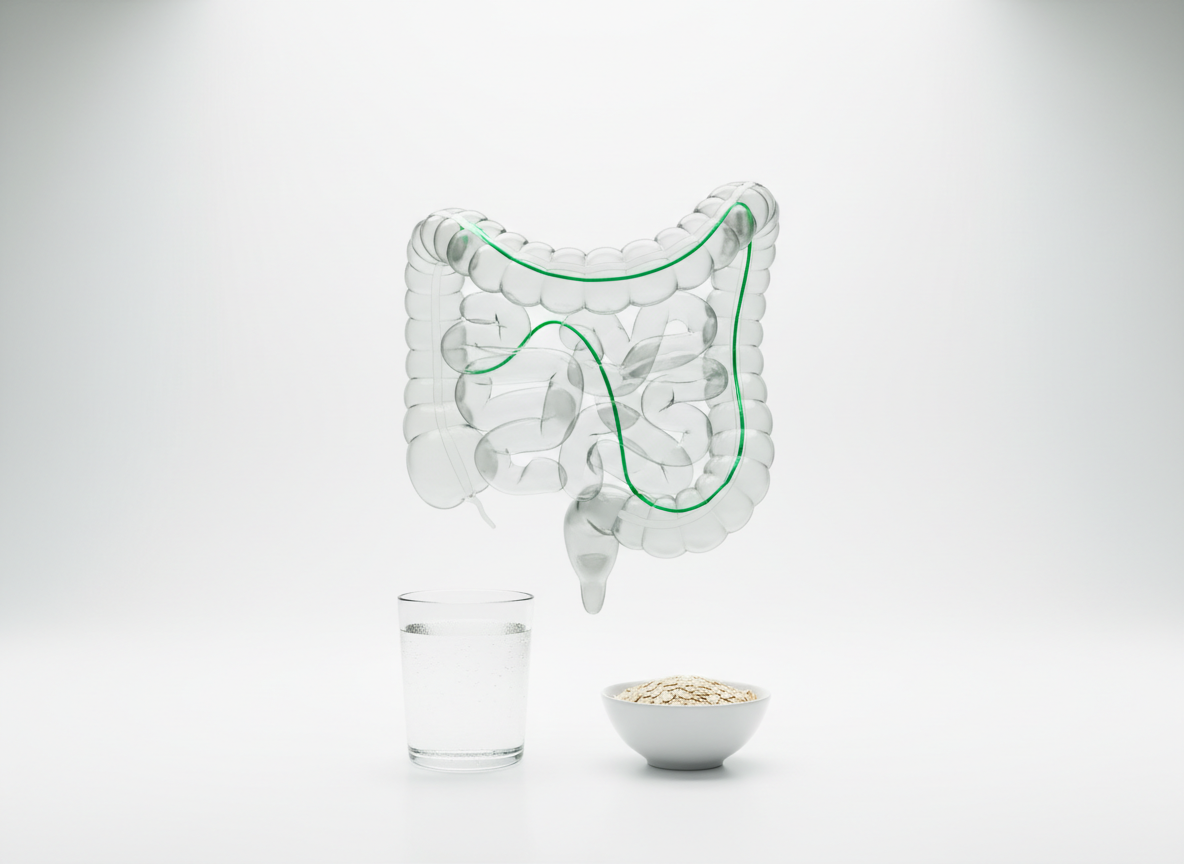
Two things happen at once. A GLP-1 slows digestion, starting with the stomach, and the labels list that delay as part of how the drug works. At the same time you eat much less, often less fiber and less fluid with it, so there is simply less moving through. Slower traffic with fewer cars is a recipe for hard, infrequent stools. That is why constipation shows up on every GLP-1 label, shots and pills alike.
Lab note
Constipation on a GLP-1 is common, usually mild, and slower to leave than the other side effects.
It also behaves differently from the rest. In the semaglutide 2.4 mg trials, a typical episode of nausea lasted 8 days and diarrhea 3, but constipation lasted a median of 47 days, against 35 days for people on placebo. The share of people constipated rose until about week 10 and then held steady, rather than fading the way nausea did. So this is the side effect to manage with a routine rather than wait out. The good news from the same analysis: nearly all gut side effects were mild or moderate, and few people stopped treatment because of them.
From the labels and trials
The numbers behind normal
47 days
median length of a constipation episode on semaglutide 2.4 mg, versus 35 on placebo (STEP trials)
Week 10
when the share of people constipated leveled off in those trials, instead of fading
4.3%
of adults on Wegovy stopped for any gut side effect, versus 0.7% on placebo, per the Wegovy label
Sources: Wharton et al., Diabetes, Obesity and Metabolism, 2022; Wegovy Prescribing Information, June 2026.
What to do
- Count from the first week. Jot down each bowel movement. If you reach three days without one, start your plan that evening instead of waiting for day six.
- Water first, all day. Sip steadily through the whole day. Stool needs water, and many people drink less once appetite drops.
- Add fiber slowly, and the right kind. A few grams more each week, mostly soluble. Here is how much fiber to eat on a GLP-1, and which kind.
- If you need more, choose one osmotic. Either magnesium citrate or MiraLAX, not both, at the lowest label dose and within the label’s time limit.
- Turn rescue into routine. Because this side effect lingers, a steady evening habit beats a weekly scramble. That is what we built GLP-1 SOS Daily Gut Relief for: 250 mg of magnesium (citrate and oxide) with a 19-strain probiotic blend, ginger and peppermint, 2 capsules with dinner. It already contains magnesium, so do not stack another magnesium product on top without asking.*
- Move after dinner. A short walk after your evening meal is free and gentle on a slow gut.
- Tell your prescriber if it shapes your week. The Wegovy label lets prescribers delay a dose step by four weeks when a dose is not tolerated. Ask, rather than skipping doses on your own.
*GLP-1 SOS Daily Gut Relief supports regular bowel movements and digestive comfort. These statements have not been evaluated by the Food and Drug Administration. This product is not intended to diagnose, treat, cure or prevent any disease.
Two kinds
Normal slow, or a same-day call
Usually expected
- A bowel movement every two or three days instead of daily
- Harder or smaller stools than before
- Worse in the weeks after a dose increase
- Bloating that eases after you go
- Better within days of more water, fiber or an osmotic
Call the same day
- More than five days without a bowel movement
- Constant or severe belly pain
- Vomiting, or not passing gas
- A hard, swollen belly
- Blood in the stool, or a fever
Slow and uncomfortable is common. Stuck, swollen and in pain is not.
When to call your doctor
Call your prescriber the same day if:
- You go more than five days without a bowel movement
- You have constant or severe belly pain, or pain spreading to your back
- You are vomiting or cannot keep liquids down
- You cannot pass gas, or your belly stays hard and swollen
- There is blood in your stool, or black stool
- You have a fever
Slow is normal. Stuck with pain is not.

From the people behind the Lab
You do not have to figure this out alone.
GLP-1 SOS is the daily companion made for life on a GLP-1. Plain answers like this one, a support team that replies to real questions from real people, and daily formulas like GLP-1 SOS Daily Gut Relief, designed around the side effects that come with the medication. The GLP-1 Lab is our free education arm: no login, no paywall, no hype. Side effects are part of the road. Suffering through them is not.
Questions people also ask
Is it normal to be constipated on Ozempic?
Yes. On the Ozempic label, 5% of people on 0.5 mg and 3.1% on 1 mg reported constipation, versus 1.5% on placebo. Wegovy is the same medicine at higher doses, and there it was 24% versus 11%. If you are moving up through Ozempic doses, expect the weeks after each increase to be the slowest, and keep water, fiber and one osmotic ready.
Is constipation normal on Mounjaro or Zepbound?
Yes. On Zepbound, 17%, 14% and 11% of people on 5, 10 and 15 mg reported constipation, versus 5% on placebo. On Mounjaro the rate was 6 to 7% versus 1%, and 13% in a long heart-outcomes trial. Tirzepatide’s effect on stomach emptying is largest after the first dose and eases over time, per the label.
Does the Wegovy pill or Rybelsus cause constipation?
It can. On the Rybelsus label, 6% of people on 7 mg and 5% on 14 mg reported constipation, versus 2% on placebo. The Wegovy label says side effects with the 25 mg pill were similar in type and frequency to the shot. The pill is taken on an empty stomach with only a small sip of water, so plan most of your water and fiber for later in the day.
How long does constipation last on a GLP-1?
Longer than the other gut side effects. In the semaglutide 2.4 mg trials, the median constipation episode lasted 47 days, versus 8 for nausea and 3 for diarrhea, and the share of people affected leveled off around week 10. That is why a daily routine of water, fiber and, if needed, one osmotic works better than waiting it out.
Can GLP-1 constipation become dangerous?
Rarely. The Wegovy label lists ileus, intestinal obstruction and severe constipation with fecal impaction among reports collected after approval. Warning signs are more than five days without a bowel movement, constant pain, vomiting, a hard swollen belly or not passing gas. If hard days alternate with loose ones, read constipation followed by diarrhea on a GLP-1.
Sources (7)
- Wegovy (semaglutide) injection and tablets, Prescribing Information. Novo Nordisk / FDA, revised June 2026.
- Ozempic (semaglutide) injection, Prescribing Information. Novo Nordisk, revised May 2026.
- Rybelsus and Ozempic (semaglutide) tablets, Prescribing Information. Novo Nordisk, revised January 2026.
- Zepbound (tirzepatide) injection, Prescribing Information. Eli Lilly, revised August 2026.
- Mounjaro (tirzepatide) injection, Prescribing Information. Eli Lilly, revised August 2026.
- Wharton S, et al. Gastrointestinal tolerability of once-weekly semaglutide 2.4 mg in adults with overweight or obesity, and the relationship between gastrointestinal adverse events and weight loss. Diabetes, Obesity and Metabolism, 2022.
- Symptoms & Causes of Constipation. National Institute of Diabetes and Digestive and Kidney Diseases (NIDDK).
Reviewed by the GLP-1 SOS editorial team · Education, not medical advice · Talk to your prescriber about your dose and your symptoms.