The short answer
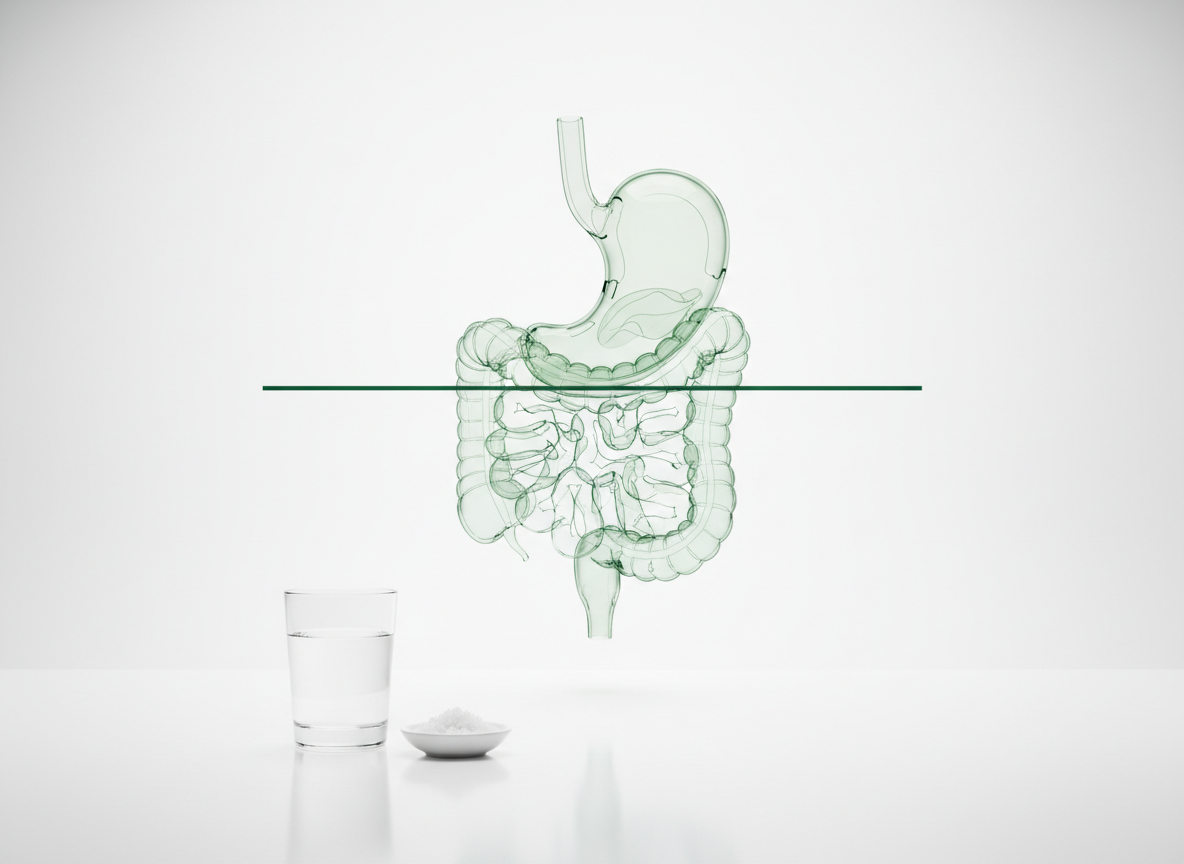
The standard target is 14 grams of fiber per 1,000 calories; eating less on a GLP-1 means a lower target. Start with soluble fiber, oats, psyllium, chia and cooked vegetables, add a few grams at a time, and take every dose with a full glass of water. Bulk without water makes a slow colon worse.
Fiber is the advice everyone gives and the one that backfires most often on a GLP-1. At GLP-1 SOS we see it in the first month more than anything else.
Two kinds of fiber
Which kind, and when
Soluble: start here
- Oats
- Psyllium (Metamucil) with a full glass of water
- Chia
- Beans, small portions
- Cooked vegetables
- Bananas
Insoluble: later, once the gut adapts
- Bran cereal
- Raw salads
- Fiber gummies
- Wheat bran
- Large raw vegetables
Soluble fiber forms a gel that carries its own water and steadies both hard and loose stool.
What is actually happening
Fiber is not one thing. There are two kinds, and inside a slow colon they behave very differently.
Insoluble fiber, from bran and raw vegetables, does not dissolve. It adds bulk, and bulk needs water to stay soft. Soluble fiber, from oats, psyllium, chia, beans and cooked vegetables, dissolves and turns into a soft gel that holds water on its own.
A GLP-1 medication slows how fast your stomach empties and how fast your colon moves things along. The prescribing information for Ozempic, Wegovy, Mounjaro and Zepbound all state that the medication delays gastric emptying, and constipation is among the most common reactions in their trials. While stool sits in a slow colon, the colon pulls water out of it. Add bulk without water and you have built a bigger, drier plug. That is the classic first-month mistake: a bran cereal, a fiber gummy, and no water.
Lab note
Bulk without water is a bigger, drier plug.
There is a second reason more fiber backfires. The Dietary Guidelines set fiber at 14 grams per 1,000 calories, a target scaled to how much you eat. On a GLP-1 you are eating fewer calories, and a good share of the water you used to get came inside food. Piling a full-diet fiber target onto a half-diet intake asks the colon to move more with less.
Soluble fiber sidesteps both problems. The gel carries its own water, adds little dry bulk, and steadies loose stool as well as hard stool, which matters on a medication where the two alternate.
The target
Set fiber by what you actually eat
14 g
per 1,000 calories: the Dietary Guidelines rule
17 to 21 g
a day at 1,200 to 1,500 calories, not the 25 to 30 you may have aimed for before
8 oz
of water, minimum, with every dose of fiber
Sources: Dietary Guidelines for Americans 2020–2025; NIDDK, Eating, Diet and Nutrition for Constipation.
What to do
- Water first, so there is something for the fiber to hold. Sip small amounts through the day, between meals rather than with them. Every dose of fiber comes with a full glass of water, no exceptions.
- Soluble first. Oats, chia, psyllium, beans in small portions, and cooked vegetables rather than raw. Leave bran cereal, raw salads and fiber gummies for later, once the gut has adapted.
- Start small and add slowly. A few grams every few days, not a full serving on day one. Gas and bloating are the sign you added faster than the gut could handle.
- If you use a psyllium supplement such as Metamucil, begin with half the label serving in a full glass of water, once a day, and work up over a week or two. Psyllium without enough water can do the opposite of what you want.
- Set your target by what you eat. At 14 grams per 1,000 calories, someone eating around 1,200 to 1,500 calories lands near 17 to 21 grams a day, not the 25 to 30 they may have aimed for before. More is not better on a slow gut.
- Pair fiber with the other two: magnesium citrate in the evening, or the osmotic option agreed with your prescriber, and a ten-minute walk after dinner. Fiber alone is bulk; bulk needs water and movement.
- Add a little back on loose days too. A small serving of oats or psyllium with water firms loose stool by absorbing the excess, which is why soluble fiber is the steady choice in both directions.
Honest options
If you want to buy one thing
From any pharmacy
- Plain psyllium husk, half a serving in a full glass of water, once a day
- Magnesium citrate in the evening, lowest amount on the label
- A ten-minute walk after dinner. Free, and it works
This covers the mechanism. It is what we tell people who ask us for the cheapest route.
What we make
- GLP-1 SOS Daily Gut Relief: 250 mg magnesium citrate and oxide, ginger, peppermint and a 19-strain probiotic blend, two capsules with dinner
- No fiber in it, on purpose. It is the part fiber works alongside, without adding bulk to a slow colon
- One routine instead of three bottles, which is what most people who write to us actually want
60-day money-back guarantee. Made by GLP-1 SOS, the people behind this Lab.*
*GLP-1 SOS Daily Gut Relief supports regular bowel movements and digestive comfort. These statements have not been evaluated by the Food and Drug Administration. This product is not intended to diagnose, treat, cure or prevent any disease.
When to call your doctor
Call your prescriber the same day if:
- You go more than five days without a bowel movement
- There is pain
- You are vomiting
- You cannot keep liquids down
- You feel faint when you stand
- Your belly stays swollen and hard
If adding fiber made your belly more swollen and your stool harder, stop adding, return to water, and bring it up at your next visit. Slow is normal. Stuck with pain is not.

From the people behind the Lab
You do not have to figure this out alone.
GLP-1 SOS is the daily companion made for life on a GLP-1. Plain answers like this one, a support team that replies to real questions from real people, and daily formulas designed around the side effects that come with the medication. The GLP-1 Lab is our free education arm: no login, no paywall, no hype. Side effects are part of the road. Suffering through them is not.
Questions people also ask
Can I take a fiber supplement on a GLP-1?
Yes, with two conditions: choose a soluble one such as psyllium, and take every dose with a full glass of water. Start at half the label serving and build up over a week or two. A fiber supplement added at full strength without water is one of the most common ways to make GLP-1 constipation worse.
Is psyllium (Metamucil) good on a GLP-1?
Psyllium is the most useful fiber supplement for a slow gut because it is mostly soluble: it forms a gel that carries its own water, adds little dry bulk, and steadies both hard and loose stool. Its one rule is water. The label says to take it with at least eight ounces, and on a GLP-1 that is the minimum.
How much fiber per day on Ozempic, Wegovy, Mounjaro or Zepbound?
Use the same rule for all of them: 14 grams per 1,000 calories you actually eat. At 1,200 to 1,500 calories that is roughly 17 to 21 grams. Reach it with soluble sources first, add a few grams at a time, and let water and a walk after dinner do the rest.
Does fiber help with GLP-1 diarrhea as well as constipation?
Soluble fiber does. The gel absorbs excess water in loose stool and holds water in hard stool, so a small daily serving of oats or psyllium steadies both. Insoluble fiber does not; on loose days, raw vegetables and bran usually make it worse.
Sources (6)
- Dietary Guidelines for Americans, 2020–2025. U.S. Department of Agriculture and U.S. Department of Health and Human Services, 2020.
- Eating, Diet, & Nutrition for Constipation. NIH National Institute of Diabetes and Digestive and Kidney Diseases (NIDDK).
- The Role of Dietary Fiber in Health Promotion and Disease Prevention: A Practical Guide for Clinicians. StatPearls, NCBI Bookshelf, updated December 2025.
- Wegovy (semaglutide) injection, Prescribing Information. Novo Nordisk / FDA, revised February 2026.
- Zepbound (tirzepatide) injection, Prescribing Information. Eli Lilly, revised August 2026.
- Clinical Recommendations to Manage Gastrointestinal Adverse Events in Patients Treated with GLP-1 Receptor Agonists: A Multidisciplinary Expert Consensus. Journal of Clinical Medicine, 2023.
Reviewed by the GLP-1 SOS editorial team · Education, not medical advice · Talk to your prescriber about your dose and your symptoms.