The short answer
Cramps on a GLP-1 usually come from eating and drinking far less. Fluid, sodium, potassium and magnesium arrive in food, so they fall with the meals, and nausea, vomiting or loose days drain more. Joint pain is less understood; fast weight loss changes how joints are loaded. Salt, minerals, protein and a nightly stretch settle most of it.
At GLP-1 SOS the message usually arrives at night: a calf that locked up at three in the morning, or knees that ache on the stairs since the weight started coming off. Here is where it comes from and what to put back.
Cramps on a GLP-1
What takes it out, what puts it back
What takes it out
- Meals a third of their old size
- A loose or vomiting day
- Plain water with no salt
- Fast weight loss taking muscle
- The two days after a shot
What puts it back
- Broth or a pinch of salt in water
- Potatoes, bananas, beans, dairy, greens
- A steady daily magnesium amount
- Protein at every small meal
- A slow calf stretch before bed
Neither cramps nor joint pain is listed on the Wegovy or Zepbound labels. Dehydration from nausea, vomiting and diarrhea is.
What is actually happening
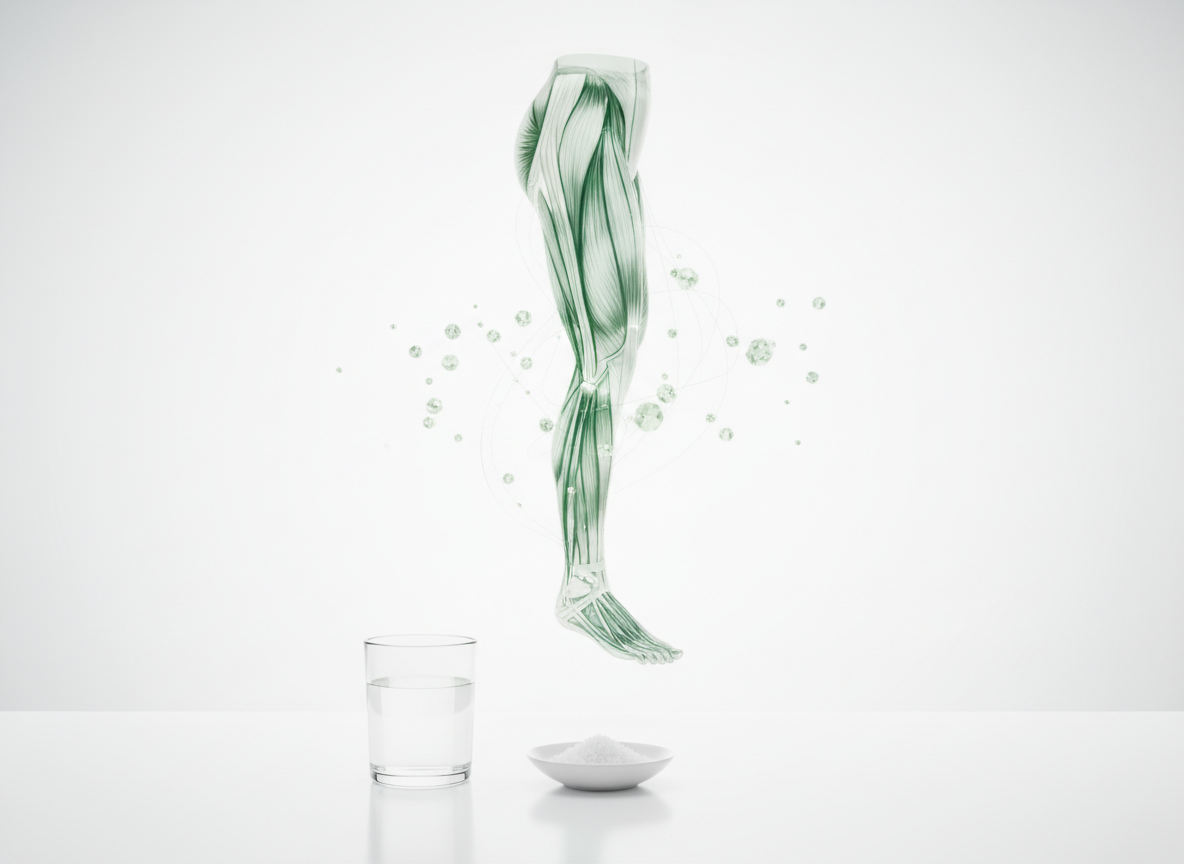
Neither muscle cramps nor joint pain appears in the adverse reaction tables of the Wegovy or Zepbound prescribing information. What both labels describe is the chain that leads to them: nausea, vomiting and diarrhea that can cause dehydration, with a warning to watch kidney function during dose starts and increases. A cramp is a nerve firing a muscle that cannot let go, and nerves misfire when water, sodium, potassium and magnesium run low.
Those four arrive in food. Most of a day’s potassium and magnesium comes from potatoes, beans, greens, dairy, nuts and fruit, and most of its salt from the meals themselves. Cut meals to a third of their old size and the minerals fall by the same share. In the body water follows salt, so less salt means less fluid held. The calf cramp at three in the morning is the muscle reporting the deficit.
Lab note
Minerals ride in on food. Eat a third, get a third.
Rapid weight loss adds a second layer. When calories drop hard, the body breaks down muscle as well as fat. The 2025 joint advisory from four US obesity and nutrition societies names muscle loss as a central risk of GLP-1 therapy and calls for protein and resistance training to protect it. A muscle that is losing tissue and running on less fuel tires sooner and cramps more easily.
Joint pain is the less explained part. It is not on the labels, and no established mechanism links the medications to the joints themselves. What is established is that joints respond to change: a body twenty pounds lighter walks more, moves differently and loads its knees, hips and feet in a new pattern, with less muscle to cushion them. Some people also feel stiff or achy in the two days after a shot, when they eat and drink least. Most of it is mechanical and temporary, and it shares the cramp’s fixes.
The chain
How less food becomes a cramp
1
Smaller meals
Potassium, magnesium and salt fall with the food.
2
Fluid follows
Less salt means less water held; loose days drain more.
3
Nerve misfires
A short, tired muscle gets a signal it cannot switch off.
4
Refill
Salt, minerals, protein and a stretch settle it.
What to do
- Salt the day, lightly. A broth, a pinch of salt in your water, or a sugar-free electrolyte mix once or twice a day, more on loose or nauseated days. Plain water without salt passes straight through and leaves the cramp behind.
- Put potassium back on the plate. A potato, a banana, a glass of milk or kefir, beans, cooked spinach, tomato sauce. These are the foods that vanish first when meals shrink, and they carry most of a day’s potassium.
- Keep magnesium steady. Nuts, seeds, beans and whole grains, or a plain magnesium supplement at a modest daily amount agreed with your prescriber. A steady daily amount matters more than a large dose after a cramp. GLP-1 SOS Daily Gut Relief puts 250 mg of magnesium as citrate and oxide into two capsules with dinner, and plain magnesium citrate at the same amount covers the mineral part just as well.*
- Protein at every small meal. Eggs, yogurt, fish, chicken, beans, or a shake when food is hard. Fed muscle cramps less and cushions joints better; ask your prescriber or a dietitian for a daily gram target.
- Stretch the calves before bed. Stand facing a wall, one foot back, heel down, and hold thirty seconds each side, then the same after any walk. A slow stretch before sleep is the usual first suggestion for night cramps.
- Lift something twice a week. Two short sessions with bands, bodyweight or light weights keep muscle on the bones while the weight comes off, which is what protects the joints from their new load. The 2025 advisory calls it a priority, not an extra.
- Log the pattern. Note when cramps come (shot day, night, after a loose day) and which joints hurt. If cramps are daily or a joint stops you walking, bring the log to your prescriber and ask about a blood test for potassium, magnesium and kidney function.
*GLP-1 SOS Daily Gut Relief supports regular bowel movements and digestive comfort. These statements have not been evaluated by the Food and Drug Administration. This product is not intended to diagnose, treat, cure or prevent any disease.
Muscle and joints
Usually the refill, or a same-day call
Usually the refill
- Calf or foot cramps at night
- Stiff or achy on shot days
- Both knees or hips ache on stairs
- Twitches after a loose day
- Eases within days of salt and minerals
Call the same day
- One calf swollen, hot or red
- One joint hot, swollen and red
- Faint when you stand
- Dark, scarce urine
- Muscle pain with real weakness
Ask your prescriber about a blood test for potassium, magnesium and kidney function if cramps are daily.
When to call your doctor
Call your prescriber the same day if:
- One calf is swollen, hot or red
- You feel faint when you stand
- You cannot keep liquids down
- Your urine is dark and scarce
- Your heartbeat is racing or irregular
- A joint is hot, swollen and red
- Muscle pain comes with weakness or very dark urine
- Cramps are still daily after a week of fluid, salt and minerals
A calf cramp at night is common. One swollen, hot calf is not.

From the people behind the Lab
You do not have to figure this out alone.
GLP-1 SOS is the daily companion made for life on a GLP-1. Plain answers like this one, a support team that replies to real questions from real people, and daily formulas like GLP-1 SOS Daily Gut Relief, designed around the side effects that come with the medication. The GLP-1 Lab is our free education arm: no login, no paywall, no hype. Side effects are part of the road. Suffering through them is not.
Questions people also ask
Why do I get leg cramps at night on Ozempic?
Night is when the deficit shows. You have gone hours without fluid or salt, the calf has been still, and the day’s small meals carried less potassium and magnesium than the muscle is used to. Ozempic does not act on the muscle; the shrinking intake does. A salted broth in the evening, a potassium-rich food at dinner, steady magnesium and a slow calf stretch before bed are where most people start.
Does Mounjaro or Zepbound cause joint pain?
Joint pain is not listed in the Zepbound or Mounjaro prescribing information, and no mechanism ties tirzepatide to the joints. What changes is the load: a lighter body that walks more, with less muscle to cushion knees, hips and feet, and days when fluid and protein run short. Most of it is mechanical and settles as muscle is rebuilt. A single joint that is hot, swollen and red is a different problem and a same-day call.
What electrolytes should I take for cramps on a GLP-1?
Sodium, potassium and magnesium, and mostly from food. Salt from a broth or a pinch in water; potassium from potatoes, bananas, dairy, beans and greens; magnesium from nuts, seeds and beans or a plain daily supplement at a modest amount. Sugar-free electrolyte mixes cover the first two on loose days. Do not take potassium tablets on your own; ask your prescriber, who can check your levels with a simple blood test.
Is muscle pain on a GLP-1 a sign I am losing muscle?
It can be part of it. Fast weight loss with a large calorie drop takes muscle along with fat, and a muscle losing tissue tires sooner, aches more and cramps more easily. The 2025 joint advisory from four US obesity and nutrition societies makes protecting muscle a core priority: a daily protein target and strength work twice a week. Pain with real weakness, or very dark urine, is a same-day call.
Sources (6)
- Wegovy (semaglutide) injection, Prescribing Information. Novo Nordisk / FDA, revised June 2026.
- Zepbound (tirzepatide) injection, Prescribing Information. Eli Lilly, revised August 2026.
- Muscle Cramps. StatPearls, NCBI Bookshelf, updated September 2025.
- Magnesium: Fact Sheet for Health Professionals. NIH Office of Dietary Supplements.
- Potassium: Fact Sheet for Health Professionals. NIH Office of Dietary Supplements.
- Nutritional priorities to support GLP-1 therapy for obesity: a joint advisory from the American College of Lifestyle Medicine, the American Society for Nutrition, the Obesity Medicine Association, and The Obesity Society. Obesity, 2025.
Reviewed by the GLP-1 SOS editorial team · Education, not medical advice · Talk to your prescriber about your dose and your symptoms.