The short answer
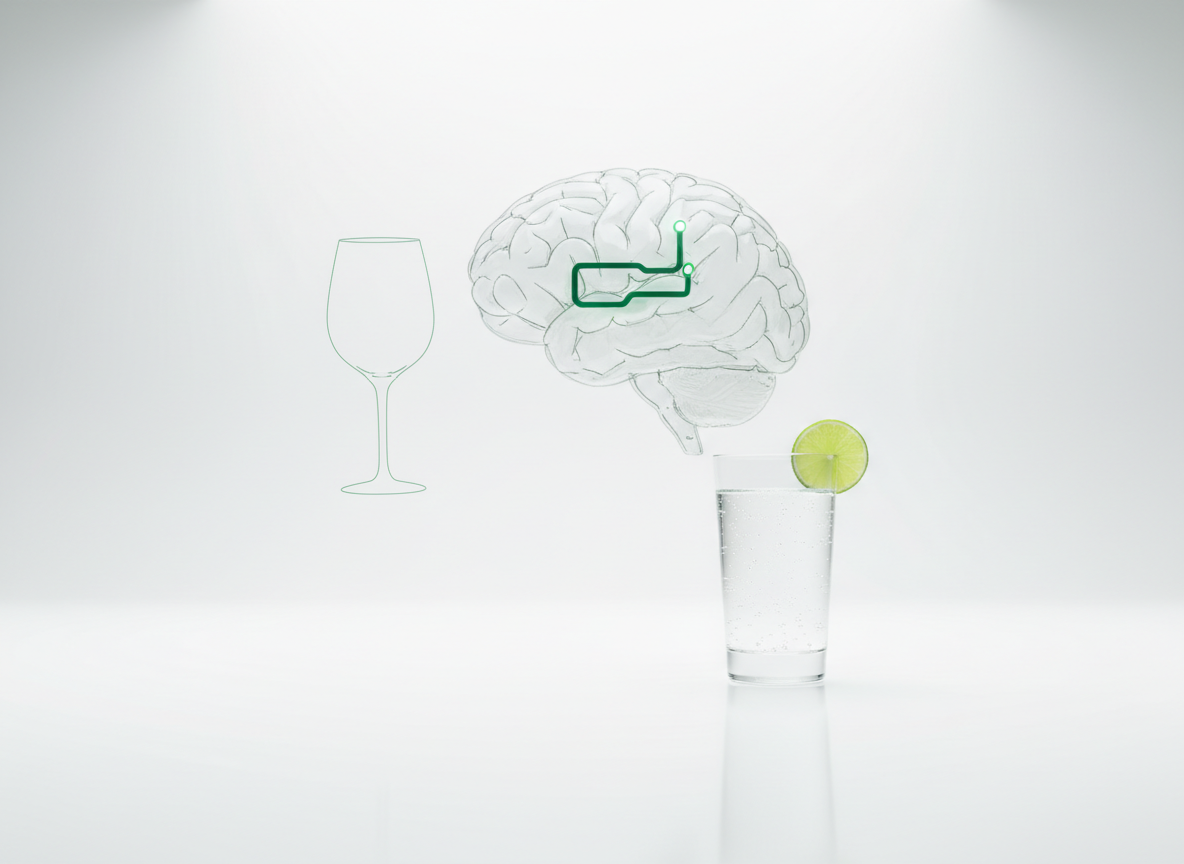
Because GLP-1 medicines act on the brain’s reward circuits as well as the stomach, the pull of a drink often fades. In a 2025 randomized trial, low-dose semaglutide reduced alcohol craving and drinks per drinking day, and large health-record studies link semaglutide to fewer alcohol problems. It is common, it is not harmful in itself, and many people welcome it. Losing interest in everything, not just alcohol, is a different matter and worth a call.
At GLP-1 SOS this comes up as a surprise more than a complaint: “I used to look forward to my glass of wine, and now I forget it is there.” We cover why a drink can hit harder or taste flat in why alcohol hits harder on a GLP-1. This page is about the wanting itself: why it fades, what the research shows, and when to mention it to your doctor.
At a glance
Three things to know
1
It is the reward, not willpower
GLP-1 receptors sit in brain areas that drive wanting. The drink simply stops feeling worth it.
2
The research points the same way
A small trial found less craving, and large record studies link semaglutide to fewer alcohol problems.
3
Not an approved use
No GLP-1 label includes alcohol use disorder. If you have one, keep your treatment and tell your prescriber.
What is actually happening
GLP-1 medicines do not only slow the stomach. The hormone they copy also acts in the brain, including the reward circuits that make food, and alcohol, feel worth reaching for. Turn that signal down and the evening drink loses its pull, the same way many people notice the quiet of less food noise. If that quiet fades later, our page on why food noise comes back explains the usual reasons.
The best test so far is a 2025 randomized trial in 48 adults with alcohol use disorder. Nine weeks of low-dose semaglutide, no higher than 1 mg, reduced how much they drank in a lab session, cut drinks per drinking day and lowered weekly craving compared with placebo. It did not change how many days people drank. In plain words: fewer drinks once started, and less wanting.
Lab note
The glass is still there. The pull toward it is what changes.
Two large health-record studies agree, with the usual limits of observational data. In 83,825 people with obesity, semaglutide was linked to a 50 to 56 percent lower risk of a new or repeat alcohol use disorder diagnosis over a year, compared with other weight-loss medicines. In a Swedish registry of 227,866 people with alcohol use disorder, periods on semaglutide were linked to a 36 percent lower risk of hospital care for it. No study yet shows how long the change lasts after stopping.
From the research
Three numbers worth knowing
9 weeks
of low-dose semaglutide reduced craving and drinks per drinking day against placebo in 48 adults (JAMA Psychiatry, 2025)
50 to 56%
lower risk of a new or repeat alcohol use disorder diagnosis with semaglutide, in records of 83,825 people (Nature Communications, 2024)
36%
lower risk of hospital care for alcohol use disorder during semaglutide use, in a Swedish registry (JAMA Psychiatry, 2025)
Sources: Hendershot et al., JAMA Psychiatry, 2025; Wang et al., Nature Communications, 2024; Lähteenvuo et al., JAMA Psychiatry, 2025.
What to do
- Let it be easy. You do not have to drink to be social. A sparkling water with lime or an alcohol-free version of your usual drink keeps a glass in your hand without the effort.
- Use the window if you wanted to cut back. Count in standard drinks, 14 grams of alcohol each. The NIAAA notes that harms can come with any amount and rise as the amount rises, so less is a real gain.
- If you drank heavily every day, do not stop all at once on your own. Suddenly stopping after regular heavy drinking can cause withdrawal, from shakiness and sweating to, in severe cases, seizures. Tell your doctor first so it can be done safely.
- Keep any alcohol treatment you already have. Alcohol use disorder is not an approved use on any GLP-1 label, and the research so far is early. Tell your prescriber, and let the two plans work together.
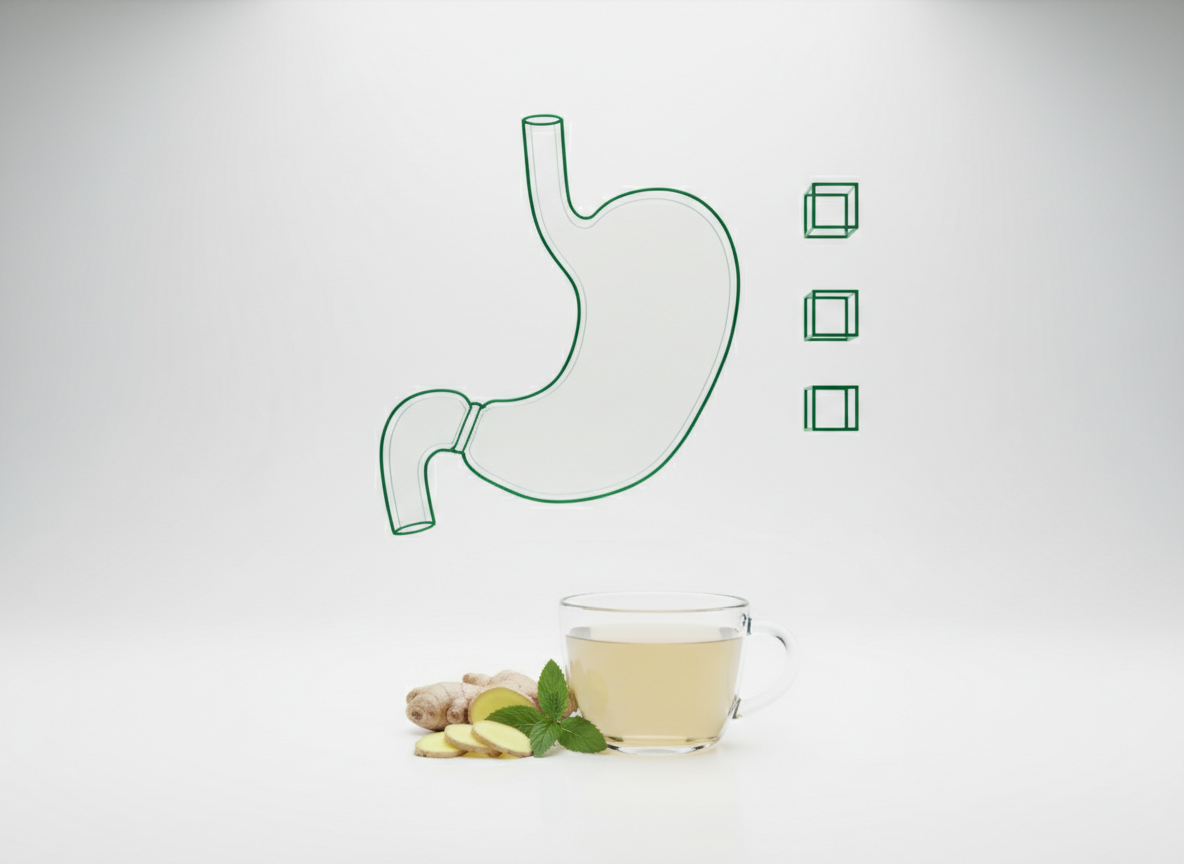
- Give the evening a new anchor. Many people miss the ritual more than the drink. A small dinner, a short walk and a cup of ginger or peppermint tea can fill the slot. If you take GLP-1 SOS Daily Gut Relief, its 2 capsules with dinner fit the same routine, with ginger and peppermint for digestive comfort and magnesium to support regular bowel movements.*
- Watch the bigger picture of your mood. If the flatness spreads to friends, hobbies and things you love, tell your prescriber. That is not the alcohol effect, and it deserves its own look.
*GLP-1 SOS Daily Gut Relief supports regular bowel movements and digestive comfort. These statements have not been evaluated by the Food and Drug Administration. This product is not intended to diagnose, treat, cure or prevent any disease.
Two kinds
A welcome change, or worth a call
Usually expected
- The evening drink no longer calls you
- Half-finished glasses at dinner
- Fewer drinks once you start
- Not missing it on weekends
Talk to your doctor
- Losing interest in everything, not just alcohol
- Low mood that lasts for weeks
- Shaking or sweating after cutting back from heavy daily drinking
- Drinking more, not less
Less wanting is a medication effect worth using. Less wanting of everything is worth a conversation.
When to call your doctor
Call your prescriber the same day if:
- You have thoughts of harming yourself; call or text 988 (Suicide & Crisis Lifeline) right away
- You have lost interest in nearly everything, or your mood has been low for weeks
- You drank heavily every day and now have shaking, sweating, confusion or a racing heart after cutting back (call 911 for a seizure or hallucinations)
- You have severe belly pain that spreads to your back, especially after drinking
- You take insulin or a sulfonylurea and feel shaky, sweaty or confused after a drink
Wanting less alcohol is usually good news. Wanting nothing at all is not, and you do not have to wait it out.

From the people behind the Lab
You do not have to figure this out alone.
GLP-1 SOS is the daily companion made for life on a GLP-1. Plain answers like this one, a support team that replies to real questions from real people, and daily formulas like GLP-1 SOS Daily Gut Relief, designed around the side effects that come with the medication. The GLP-1 Lab is our free education arm: no login, no paywall, no hype. Side effects are part of the road. Suffering through them is not.
Questions people also ask
Why don’t I want to drink on Ozempic?
Semaglutide, the medicine in Ozempic and Wegovy, acts on the brain’s reward circuits as well as the stomach, so a drink stops feeling worth it. Reports of reduced desire to drink are what prompted the research, and in a 2025 randomized trial, low-dose semaglutide reduced craving and drinks per drinking day in adults with alcohol use disorder. It is common and not harmful in itself.
Does Mounjaro or Zepbound reduce alcohol cravings?
Tirzepatide acts on the same GLP-1 receptor, so a similar effect is plausible, but the trial and record studies so far are mostly on semaglutide. The Mounjaro and Zepbound labels do not include alcohol use disorder. If you notice less interest in drinking, enjoy it. If you have a drinking problem, keep your existing treatment and tell your prescriber.
Will I want alcohol again if I stop my GLP-1?
Nobody knows yet. The trial lasted 9 weeks and the record studies looked at people while they were on treatment. Because the effect runs through the medication, it would not be surprising if the pull came back after stopping. If cutting back mattered to you, build habits now that do not depend on it. More in what happens when you stop a GLP-1.
Can a GLP-1 treat alcohol use disorder?
Not officially. No GLP-1 label includes alcohol use disorder, and the researchers behind the 2025 trial called for larger trials before any recommendation. Record studies are encouraging, linking semaglutide to fewer diagnoses and hospital stays, but they cannot prove cause. If you have alcohol use disorder, keep proven treatment and talk with your prescriber about the whole plan.
Is it bad that I lost interest in alcohol on a GLP-1?
No. Less wanting of alcohol is a common, expected effect, and the NIAAA notes that harms rise as the amount of alcohol rises. The one thing to watch is whether the loss of interest stays with alcohol. If you also stop enjoying friends, food you like and things you love, tell your prescriber; that deserves its own look.
Sources (7)
- Hendershot CS, et al. Once-weekly semaglutide in adults with alcohol use disorder: a randomized clinical trial. JAMA Psychiatry, 2025.
- Wang W, et al. Associations of semaglutide with incidence and recurrence of alcohol use disorder in real-world population. Nature Communications, 2024.
- Lähteenvuo M, et al. Repurposing semaglutide and liraglutide for alcohol use disorder. JAMA Psychiatry, 2025.
- Understanding Alcohol Drinking Patterns. National Institute on Alcohol Abuse and Alcoholism (NIAAA), updated January 2026.
- Alcohol withdrawal. MedlinePlus Medical Encyclopedia, National Library of Medicine, reviewed January 2025.
- Wegovy (semaglutide) injection and tablets, Prescribing Information. Novo Nordisk / FDA, revised June 2026.
- Zepbound (tirzepatide) injection, Prescribing Information. Eli Lilly, revised August 2026.
Reviewed by the GLP-1 SOS editorial team · Education, not medical advice · Talk to your prescriber about your dose and your symptoms.