The short answer
Three things, usually together. A GLP-1 can change taste itself: the labels list it, but in fewer than 2 adults in 100. Taste may also get sharper rather than duller, so bitterness reads stronger. And coffee drives stomach acid into a stomach that now empties slowly, so a few queasy cups teach your brain to dislike it. For most people the cup comes back once the dose settles.
At GLP-1 SOS we hear this as a small grief: my morning coffee was the one thing I looked forward to, and now it tastes like burnt metal. Our page on whether you can drink coffee on a GLP-1 covers how to drink it. This one is about why the same cup suddenly tastes wrong.
Three reasons
Why the same cup changed
1
Taste itself shifts
Changed taste is a listed side effect, uncommon but real, and taste may get sharper rather than duller.
2
Bitter means acid
Coffee’s bitter compounds push the stomach to make acid, and a slow stomach holds it longer.
3
The brain learns
A few cups followed by nausea are enough to make coffee smell and taste wrong for a while.
What is actually happening
Start with taste. The labels list dysgeusia, the medical word for changed taste: 1.7 percent of adults on Wegovy against 0.5 percent on placebo, and 0.4 percent on Zepbound against none, so it affects a small minority. GLP-1 is not only a gut hormone: in mice it is made inside taste buds, with its receptor on the nerve fibers beside them, and it helps set how strongly sweet and sour register.
In a 2025 randomized study of 30 women with obesity, 16 weeks of semaglutide improved taste recognition, from about 12 to 14 points out of 16, an estimated 2.5 points more than placebo. It is small and did not test coffee, but it fits what many people describe: not a dulled palate, a louder one, where the bitter edge of a dark roast stands out.
Lab note
Your coffee did not change. Your tongue and your stomach did, and your brain is keeping score.
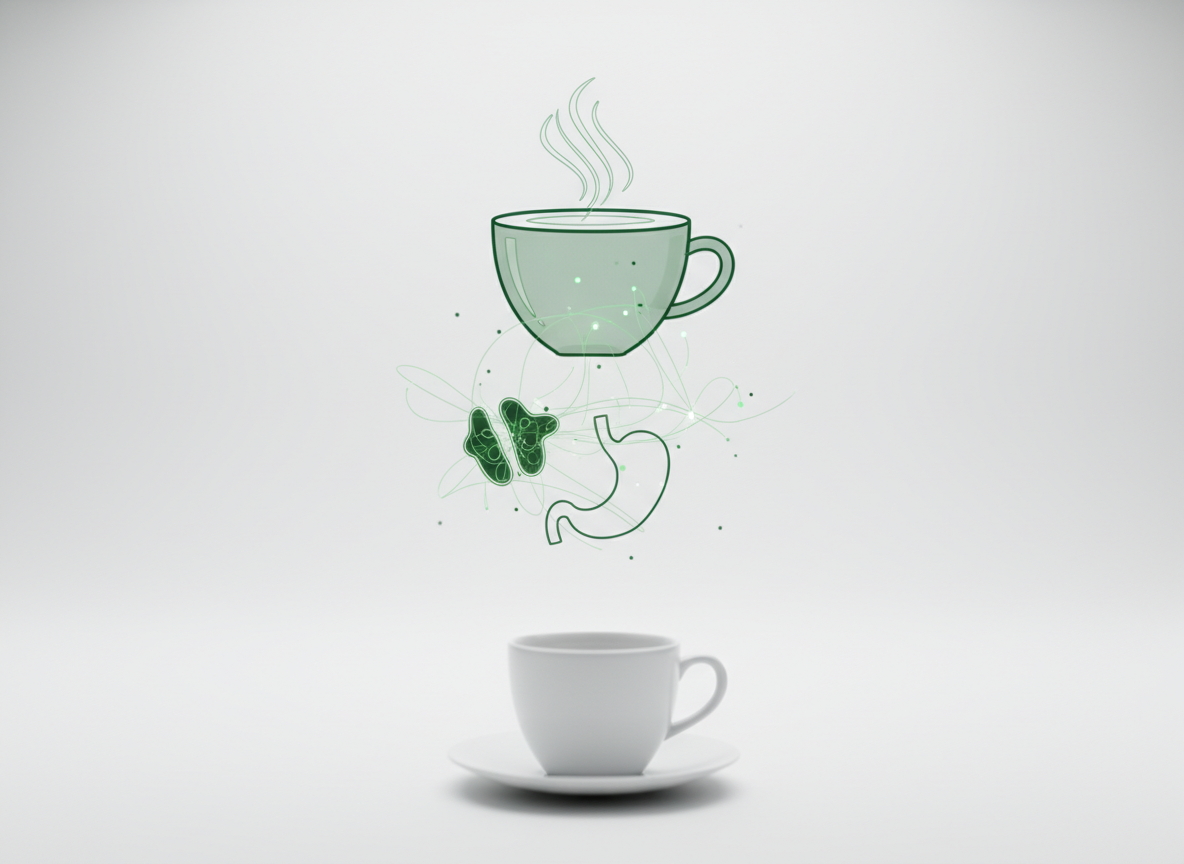
Then the stomach. A 2017 study found that caffeine and other bitter compounds activate bitter-taste receptors in the mouth and stomach lining, which drive acid secretion. On a GLP-1 the stomach empties more slowly, and coffee often arrives before food: acid sitting in an empty, slow stomach is the hollow, queasy feeling.
Finally, learning. Taste aversion is one of the most robust kinds of learning: pair a flavor with nausea and the brain flags it as unsafe. Weeks of queasy mornings with coffee in hand are exactly that pairing, which is why the smell alone can turn you, and why the dislike usually fades once the cup stops arriving with nausea.
From the labels and studies
Three numbers worth knowing
1.7 vs 0.5%
of adults reporting changed taste on Wegovy versus placebo, per the Wegovy label: real, but uncommon
12 to 14
out of 16 on a taste recognition test after 16 weeks of semaglutide, in a small 2025 trial: sharper, not duller
400 mg
of caffeine a day, about two to three 12-ounce cups, is the amount the FDA cites as not generally linked to harm
Sources: Wegovy Prescribing Information, June 2026; Journal of Clinical Endocrinology and Metabolism, 2025; FDA, 2024.
What to do
- Take a short break on purpose. A week or two off coffee, or half-decaf, lets the nausea pairing fade. Tea or plain decaf keeps the ritual without the trigger.
- Never let coffee be breakfast. A few bites of protein first, then the cup. It gives the acid something to work on and breaks the empty-stomach link.
- Turn the bitterness down. A lighter roast, a smaller cup, more milk. If your palate is sharper now, your old drink may simply be too strong.
- Drink water first. Thirst falls on a GLP-1, and a dry mouth makes tastes harsher. A glass of water before the cup helps; our page on dry mouth on a GLP-1 has more.
- Move the comfort to the evening. Mornings are when the stomach is emptiest. A small early dinner and something gentle afterwards set up a calmer next morning. GLP-1 SOS Daily Gut Relief is 2 capsules with dinner, with 200 mg of ginger and 50 mg of peppermint to support digestive comfort on queasy days. A cup of ginger tea after dinner does part of the same job.*
- Bring it back slowly. When the queasy weeks pass, try a small, milder cup after food on a calm day, not right after a shot or a dose increase.
- Watch the other cups too. If wine or beer also tastes off, it is the same mix of palate and stomach; see why alcohol hits harder on a GLP-1. If everything tastes wrong and you are barely eating, tell your prescriber.
*GLP-1 SOS Daily Gut Relief supports regular bowel movements and digestive comfort. These statements have not been evaluated by the Food and Drug Administration. This product is not intended to diagnose, treat, cure or prevent any disease.
Two kinds
A passing dislike, or something to check
Usually passing
- Coffee tastes bitter, metallic or flat
- The smell alone puts you off
- Queasy after a cup on an empty stomach
- Worse in the first weeks of a dose
- Fades after a break of a week or two
Worth a call
- Every food tastes wrong, or you cannot eat
- Burning behind the breastbone most days
- Vomiting, or no liquids staying down
- Heart racing or faint after caffeine
- Dry mouth that never eases
Losing a taste for coffee is common. Losing your appetite for everything is a different conversation.
When to call your doctor
Call your prescriber the same day if:
- You are vomiting or cannot keep liquids down
- You have severe or persistent stomach pain, especially if it spreads to your back
- Burning behind the breastbone does not ease after a few days without coffee
- You vomit blood or pass black stool
- Your heart races or you feel faint after caffeine
- Food in general tastes so wrong that you are barely eating or drinking
Going off coffee is common. Going off food and fluids is not.

From the people behind the Lab
You do not have to figure this out alone.
GLP-1 SOS is the daily companion made for life on a GLP-1. Plain answers like this one, a support team that replies to real questions from real people, and daily formulas like GLP-1 SOS Daily Gut Relief, designed around the side effects that come with the medication. The GLP-1 Lab is our free education arm: no login, no paywall, no hype. Side effects are part of the road. Suffering through them is not.
Questions people also ask
Why does coffee taste bad on Ozempic or Wegovy?
Usually three things at once. Changed taste is on the labels, in 1.7 percent of adults on Wegovy against 0.5 percent on placebo. Taste may also get sharper, so bitterness stands out. And coffee on an empty, slow stomach brings nausea, which teaches the brain to dislike it. A short break and a milder cup after food usually help.
Why does coffee make me nauseous on Mounjaro or Zepbound?
Because its bitter compounds push the stomach to make acid, and tirzepatide slows how fast the stomach empties. Coffee before food means acid sitting in an empty, slow stomach. Eat something first, make the cup smaller and milder, and skip it on the day or two after your shot, when the medication level is highest.
Will I ever like coffee again on a GLP-1?
Most people do. Taste aversions fade when the flavor stops arriving with nausea, so the queasy first weeks and dose steps are the worst time to judge. Take a week or two off or go half-decaf, then reintroduce a small, milder cup after food on a calm day. If nothing tastes right after months, mention it to your prescriber.
Does a GLP-1 change your taste buds?
It can affect taste, though the mechanism in people is still being studied. In mice, GLP-1 is made in taste buds and helps set sweet and sour sensitivity. In a small 2025 trial, semaglutide improved how well women recognized basic tastes. The labels list changed taste as uncommon: 1.7 percent on Wegovy, 0.4 percent on Zepbound.
Is it the coffee or the caffeine that makes me sick?
Often both. Caffeine is one of the bitter compounds that trigger stomach acid, but other coffee compounds do it too, so decaf can still bother an empty stomach, just less. Try half-decaf after food first. Keep total caffeine under the 400 mg a day the FDA cites for most adults, counting tea, soda and energy drinks.
Sources (7)
- Wegovy (semaglutide) injection and tablets, Prescribing Information. Novo Nordisk / FDA, revised June 2026.
- Zepbound (tirzepatide) injection, Prescribing Information. Eli Lilly, revised August 2026.
- Semaglutide and Taste in Women With Obesity and Polycystic Ovary Syndrome: A Randomized Placebo-Controlled Study. Journal of Clinical Endocrinology and Metabolism, 2025.
- Modulation of taste sensitivity by GLP-1 signaling. Journal of Neurochemistry, 2008.
- Caffeine induces gastric acid secretion via bitter taste signaling in gastric parietal cells. Proceedings of the National Academy of Sciences, 2017.
- Taste aversion learning: a contemporary perspective. Nutrition, 1999.
- Spilling the Beans: How Much Caffeine is Too Much? U.S. Food and Drug Administration, content current as of August 2024.
Reviewed by the GLP-1 SOS editorial team · Education, not medical advice · Talk to your prescriber about your dose and your symptoms.