The short answer
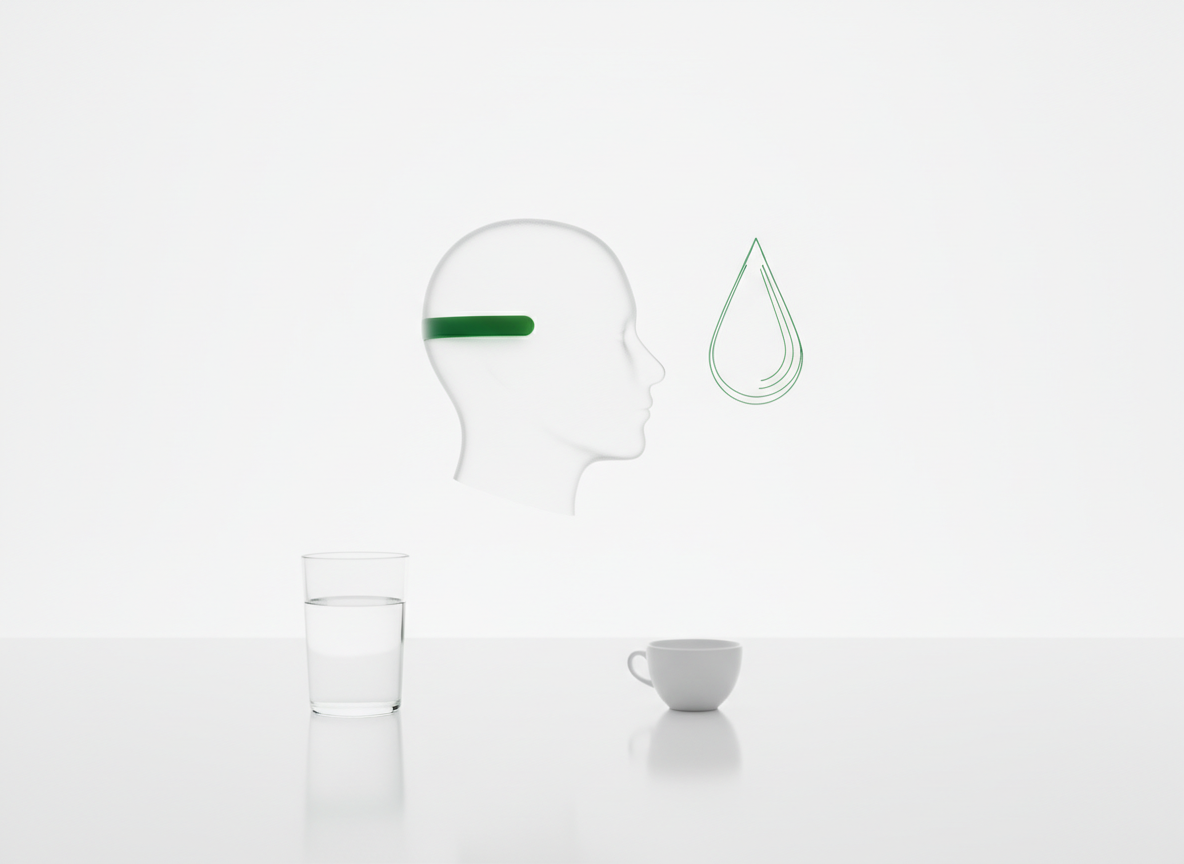
It is common, and usually not the shot itself doing harm. Headache was reported by 14 in 100 adults on Wegovy versus 10 in 100 on placebo. Most shot-day headaches line up with the medication’s peak: you eat less, drink less and often skip your usual coffee. Water, a small meal, your normal caffeine and rest settle most of them. A sudden severe headache, confusion or weakness needs urgent care.
At GLP-1 SOS we hear this from people who never had headaches before: a dull band around the head on shot day or the day after. The medication plays a part, but usually the cause is something it changed in your day, and those things are easy to fix.
At a glance
The three usual suspects
Too little food
Appetite drops at the peak. Eight hours without eating is enough to trigger a fasting headache.
Too little fluid
Nausea makes you sip less, and loose stools or vomiting take fluid out.
Less caffeine
Coffee tastes off or sits badly, so you skip it. Withdrawal starts within 24 hours.
What is actually happening
Headache is a listed side effect. In the Wegovy weight-loss trials, 14 in 100 adults on 2.4 mg reported it against 10 in 100 on placebo, a real but modest gap. The Ozempic and Rybelsus labels list it among reports after approval. The Zepbound and Mounjaro labels do not list it among their common reactions.
Timing is the clue. Semaglutide peaks one to three days after a weekly shot and tirzepatide about a day after, so appetite is lowest and nausea highest right around shot day. That is when people skip meals, sip less and leave their coffee. Our guide to what to expect on GLP-1 injection day covers the whole week; this page is the headache part of it.
Lab note
The shot lowers your appetite. The headache usually comes from what you stopped doing because of it.
Each suspect has its own fingerprint. The International Classification of Headache Disorders defines a fasting headache as a dull, all-over headache after at least eight hours without food that improves after eating, and notes it is not explained by low blood sugar. Caffeine-withdrawal headache follows two weeks or more of over 200 mg a day, starts within 24 hours of the missed dose and is relieved within an hour by 100 mg of caffeine. A 2021 review notes that dehydration alone can cause headache and often worsens an existing headache tendency.
Two other causes matter for some people. On insulin or a sulfonylurea, low blood sugar can show up as a headache with shakiness or sweating; the Zepbound label reports it in 10.3% of people also on a sulfonylurea versus 2.1% without. And a GLP-1 can lower blood pressure, especially with blood pressure pills or after fluid loss, which feels like a lightheaded headache on standing.
From the labels and headache criteria
The numbers behind shot-day headaches
14 vs 10 in 100
adults reported headache on Wegovy 2.4 mg versus placebo in the weight-loss trials
8 hours
without food is enough to qualify as a fasting headache, per the International Headache Society
24 hours
after a missed coffee habit of over 200 mg a day, caffeine-withdrawal headache can begin
Sources: Wegovy Prescribing Information, June 2026; International Classification of Headache Disorders, 3rd edition.
What to do
- Drink first. A large glass of water or broth now, then small sips through the afternoon. Our page on how much water to drink on a GLP-1 has the daily target. Salted broth or a sugar-free electrolyte mix helps if you have had loose stools.
- Eat something small within the hour. Crackers and cheese, a yogurt, toast with peanut butter, half a sandwich. You do not need a meal, just an end to the fast. Do not let more than four or five waking hours pass without a few bites on peak days.
- Keep your usual caffeine, in a gentler form. If coffee turns your stomach, switch to a smaller cup, a milder roast, or tea, rather than stopping. If you want to cut back, do it gradually, as the FDA advises. Our page on coffee on a GLP-1 covers the rest.
- Settle the nausea so you can eat and drink. Queasiness is what stops most people from drinking and eating on peak days. Ginger tea after a small dinner helps, and it is why GLP-1 SOS Daily Gut Relief pairs 200 mg of ginger root with 50 mg of peppermint in 2 capsules with dinner, for digestive comfort on the queasy days.*
- Check your sugar if you take insulin or a sulfonylurea. Under 70 mg/dL, follow your low-sugar plan: NIDDK advises 15 to 20 grams of fast carbohydrate and a recheck after 15 minutes. Tell your prescriber; the labels say those doses may need lowering on a GLP-1.
- Stand up slowly and rest. If the headache comes with lightheadedness, sit before you stand and lie down in a quiet room for half an hour. Ask your pharmacist which pain reliever suits you.
- Log two shot weeks. Note the hour the headache started, what you ate and drank before it, and your coffee. A pattern usually appears in two cycles. Bring the log if headaches keep coming.
*GLP-1 SOS Daily Gut Relief supports regular bowel movements and digestive comfort. These statements have not been evaluated by the Food and Drug Administration. This product is not intended to diagnose, treat, cure or prevent any disease.
Two kinds
A shot-day headache, or a same-day call
Usually a shot-day headache
- Dull, all over, or a band around the head
- On shot day or the day after
- You ate or drank little, or skipped coffee
- Eases with water, food or caffeine
- Gone within a day
Get help the same day
- Sudden, severe, the worst of your life
- Confusion, weakness, numbness, slurred speech
- Fever with a stiff neck
- Shaky, sweaty and confused on insulin or a sulfonylurea
- Cannot keep fluids down, or faint when standing
Water, food, coffee, rest. In that order.
When to call your doctor
Call 911 for a sudden, severe headache, confusion, weakness or trouble speaking. Call your prescriber the same day if:
- You have a headache with fever and a stiff neck
- You take insulin or a sulfonylurea and feel shaky, sweaty or confused
- You cannot keep fluids down, or you feel faint when you stand
- You have swelling of the face, lips or throat, or trouble breathing
- Headaches come every day for a week, or get worse with each shot
A dull shot-day headache that fades with water and food is common. A sudden, severe headache is an emergency.

From the people behind the Lab
You do not have to figure this out alone.
GLP-1 SOS is the daily companion made for life on a GLP-1. Plain answers like this one, a support team that replies to real questions from real people, and daily formulas like GLP-1 SOS Daily Gut Relief, designed around the side effects that come with the medication. The GLP-1 Lab is our free education arm: no login, no paywall, no hype. Side effects are part of the road. Suffering through them is not.
Questions people also ask
Is headache a side effect of Ozempic or Wegovy?
Yes. In the Wegovy weight-loss trials, 14 in 100 adults on 2.4 mg reported headache, versus 10 in 100 on placebo, and the Ozempic label lists headache among reports after approval. Most shot-day headaches line up with the medication’s peak, when people eat and drink less and skip coffee. Fixing those usually settles it. A sudden, severe headache is never something to wait out.
Does Mounjaro or Zepbound cause headaches?
The Zepbound and Mounjaro labels do not list headache among their common side effects. Tirzepatide does lower appetite, cause nausea and sometimes lower blood pressure, and the Zepbound label reports low blood pressure in 1.6% of people versus 0.1% on placebo. So the same shot-day triggers apply: missed meals, too little fluid and less coffee. Treat those first.
What can I take for a headache on a GLP-1?
Start with water, a small snack and your usual caffeine, which settle most shot-day headaches. Neither label lists common pain relievers as an interaction, but ask your pharmacist which one suits you. Because the labels warn that losing fluid from vomiting or diarrhea can lead to kidney problems, ask before using ibuprofen or naproxen on a day you are losing fluids.
Why do I get a headache the day after my Wegovy shot?
Because that is close to the peak. Semaglutide reaches its highest level one to three days after the shot, when appetite is lowest and nausea highest. People skip meals, sip less and leave their coffee, and each of those can cause a headache on its own. Plan a small snack, a water bottle and your normal coffee for the day after, and see if the pattern changes.
Can cutting back on coffee on a GLP-1 cause headaches?
Yes. The International Headache Society defines caffeine-withdrawal headache as one starting within 24 hours of missing a habit of over 200 mg a day, and it fades within a week. A 12-ounce brewed coffee can hold 113 to 247 mg, per the FDA. If coffee sits badly on a GLP-1, switch to smaller cups or tea and cut back gradually rather than stopping.
Sources (7)
- Wegovy (semaglutide) injection and tablets, Prescribing Information. Novo Nordisk / FDA, revised June 2026.
- Zepbound (tirzepatide) injection, Prescribing Information. Eli Lilly, revised August 2026.
- 10.5 Headache attributed to fasting. International Classification of Headache Disorders, 3rd edition (ICHD-3). International Headache Society.
- 8.3.1 Caffeine-withdrawal headache. International Classification of Headache Disorders, 3rd edition (ICHD-3). International Headache Society.
- Dehydration and Headache. Current Pain and Headache Reports, 2021.
- Low Blood Glucose (Hypoglycemia). NIH National Institute of Diabetes and Digestive and Kidney Diseases (NIDDK), reviewed July 2021.
- Spilling the Beans: How Much Caffeine Is Too Much? U.S. Food and Drug Administration, Consumer Update, August 2024.
Reviewed by the GLP-1 SOS editorial team · Education, not medical advice · Talk to your prescriber about your dose and your symptoms.