The short answer
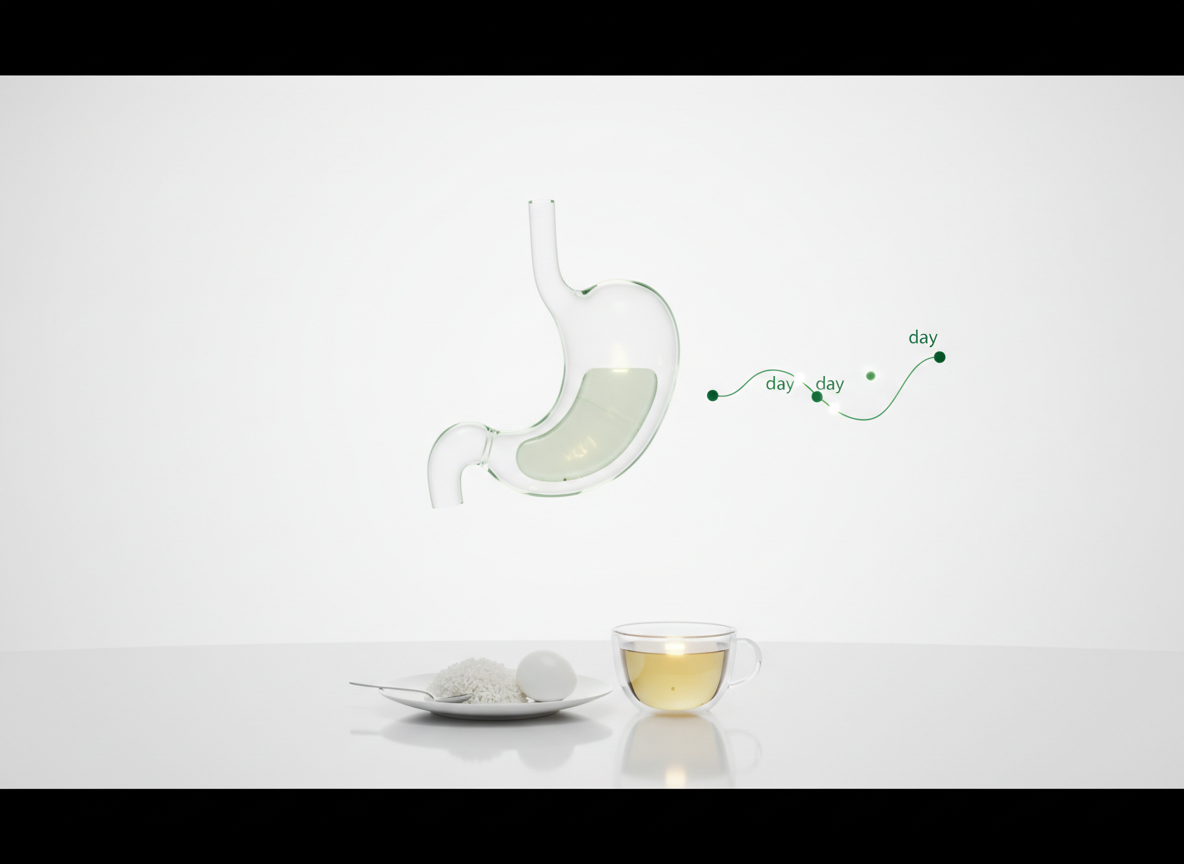
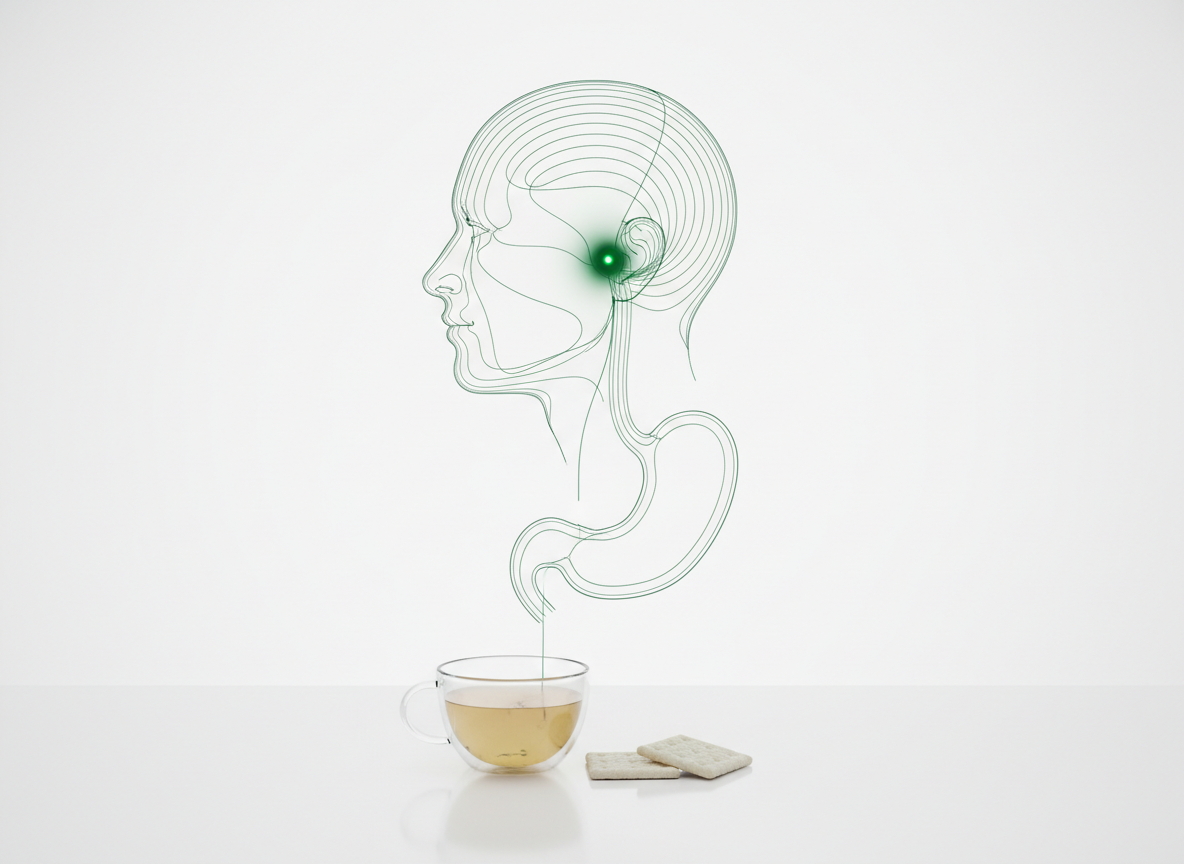
Two places at once. A GLP-1 slows how fast your stomach empties, so food sits longer and the stomach feels full and queasy. It also acts on GLP-1 receptors in the brainstem, in areas that control appetite and nausea. Both effects are strongest after each dose increase and ease as the body adapts, which is why nausea peaks during escalation in every label.
At GLP-1 SOS nausea is the side effect people ask about most in the first month, and the question behind it is usually a worried one: is my body rejecting this? It is not. Nausea comes from the same actions that make the medication work, turned up a little too far for a while. Knowing where it comes from tells you which habits actually help.
At a glance
Where the queasiness comes from
1
A slower stomach
Food leaves the stomach later, so meals sit, stretch and press back up.
2
The brain’s nausea center
GLP-1 receptors sit in brainstem areas that handle fullness and nausea.
3
The dose step
Each increase is a new jump the body has not adapted to yet.
What is actually happening
The first source is the stomach. Every GLP-1 label says the drug delays gastric emptying. A meal that would normally move on stays put, so the stomach stays full for longer, and a stomach that cannot empty is a classic trigger for queasiness. Fat, large portions and eating fast make it worse, because each adds to what is already waiting.
The second source is the brain. A 2019 review in Molecular Metabolism describes GLP-1 receptors in the area postrema and the nucleus of the solitary tract, two brainstem regions that sense signals from the blood and the gut and help control fullness, nausea and vomiting. A 2022 review in the British Journal of Pharmacology states plainly that both the appetite-lowering and the nausea effects of these drugs come from activating GLP-1 receptors in the brain. The same switch that quiets food noise can, at a higher setting, make you feel sick.
Lab note
Nausea is the medication working a notch too hard, not your body rejecting it.
The third piece is timing. The labels use slow dose steps because gut reactions cluster during escalation: each one reports that gut reactions were most frequent while the dose was going up. The Zepbound label adds that the delay in stomach emptying is largest after the first dose and shrinks with later doses. In the pooled semaglutide 2.4 mg trials, nausea peaked around week 20, shortly after escalation ended, and a typical episode lasted a median of 8 days. Our page on how long nausea lasts after an injection maps the shot-by-shot curve.
Rates differ by drug and dose. In weight-loss trials, nausea was reported by 44% on Wegovy 2.4 mg (16% on placebo) and by 25% to 29% on Zepbound (8% on placebo). In diabetes trials at lower doses it was 16% to 20% on Ozempic and 12% to 18% on Mounjaro. Compounded versions use the same molecules and act the same way. Reassuringly, the same pooled analysis found that nausea and other gut effects explained less than one percentage point of the extra weight lost compared with placebo: the drug works whether or not you feel sick.
From the labels and trials
The numbers behind it
44%
of adults on Wegovy 2.4 mg reported nausea, against 16% on placebo, per the Wegovy label
Week 20
when nausea peaked in the semaglutide 2.4 mg trials, shortly after dose escalation ended, before declining
Under 1 point
of the extra weight loss on semaglutide was explained by gut side effects in the pooled STEP analysis
Sources: Wegovy Prescribing Information, June 2026; Diabetes, Obesity and Metabolism, 2022.
What to do
- Shrink the plate, slow the fork. Smaller portions, eaten slowly, stopping at the first sign of fullness. A slower stomach needs less to feel full, and every extra bite stretches it further.
- Go easy on fat on the days after a shot. Fried, creamy and greasy food sits longest in a slowed stomach. Our guide to what to eat when nauseous on a GLP-1 lists the plates that pass most easily.
- Sip between meals, not with them. Drinks add volume to a full stomach. Small, steady sips through the day keep you hydrated without adding to the pressure at mealtimes.
- Keep one gentle evening routine. A light dinner a few hours before bed, a short walk, and something warm and calm afterward. GLP-1 SOS Daily Gut Relief was built for that routine: 200 mg of ginger and 50 mg of peppermint for digestive comfort and 250 mg of magnesium for regular bowel movements, in 2 capsules with dinner.* A plain cup of ginger or peppermint tea fits the same routine.
- Do not let constipation stack on top. A colon backed up for days adds pressure and makes nausea worse. Keep water, fiber and a daily routine going so the two do not feed each other.
- Give each dose step time, and ask before pushing on. Judge a new dose after about four weeks, not after one shot. If a step is too hard, the Wegovy label lets prescribers delay escalation by four weeks; see nausea after a dose increase for what to ask.
*GLP-1 SOS Daily Gut Relief supports regular bowel movements and digestive comfort. These statements have not been evaluated by the Food and Drug Administration. This product is not intended to diagnose, treat, cure or prevent any disease.
Two kinds
Expected queasiness, or a same-day call
Usually expected
- Queasy one to three days after a shot
- Worse in the weeks after a dose increase
- Worse after large, fatty or late meals
- Easing week by week on the same dose
- Mild enough to eat small meals
Call the same day
- Vomiting more than once in a day
- Cannot keep liquids down
- Severe belly pain, or pain into the back
- Faint, dizzy or barely urinating
- Getting worse with each shot
Queasy and improving is the medication settling in. Worse every week is not.
When to call your doctor
Call your prescriber the same day if:
- You have vomited more than once in 24 hours or cannot keep liquids down
- You feel faint when you stand, are very thirsty or pass very little urine
- You have severe belly pain that does not go away, with or without vomiting, sometimes spreading to the back
- You have pain in the upper right belly, fever, or yellow skin or eyes
- Nausea is getting worse with each shot instead of easing
- You take insulin or a sulfonylurea and cannot eat, or have shakiness, sweating or low readings
Nausea that fades is the medication settling in. Nausea that builds, or comes with pain, needs a call.

From the people behind the Lab
You do not have to figure this out alone.
GLP-1 SOS is the daily companion made for life on a GLP-1. Plain answers like this one, a support team that replies to real questions from real people, and daily formulas like GLP-1 SOS Daily Gut Relief, designed around the side effects that come with the medication. The GLP-1 Lab is our free education arm: no login, no paywall, no hype. Side effects are part of the road. Suffering through them is not.
Questions people also ask
Why does Ozempic or Wegovy make me nauseous?
Semaglutide, the drug in both, slows how fast your stomach empties and acts on brainstem areas that control fullness and nausea. Food sits longer and the brain reads that as queasiness. The Wegovy label reports nausea in 44% of adults on 2.4 mg, against 16% on placebo; Ozempic, at lower diabetes doses, lists 16% to 20%. Most of it happens during dose increases and eases with time.
Why is Mounjaro or Zepbound nausea worse after a dose increase?
Each step is a fresh jump the body has not adapted to. The Zepbound label says the delay in stomach emptying is largest after the first dose and diminishes with later doses, and that most nausea, vomiting and diarrhea happened during escalation. It reports nausea in 25% to 29% of adults across doses, against 8% on placebo. The first two weeks of a new dose are usually the hardest.
Does nausea mean the GLP-1 is working better?
No. In the pooled semaglutide 2.4 mg trials, people lost similar amounts of weight with or without gut side effects, and nausea and similar effects explained less than one percentage point of the extra weight loss. The medication works through appetite and fullness, not through making you sick. You do not need to feel queasy for it to do its job.
Will GLP-1 nausea go away?
For most people it fades. In the semaglutide trials, nausea peaked around week 20, shortly after dose escalation ended, then declined more than any other gut effect, and a typical episode lasted a median of 8 days. Nearly all gut side effects were mild or moderate. If it is not easing four weeks into a dose, talk to your prescriber about slowing the next step.
Why does GLP-1 nausea get worse at night or after dinner?
Dinner is often the largest and richest meal, and it lands on a stomach the medication has already slowed. Lying down soon after puts that full stomach under more pressure. A smaller, lower-fat dinner finished a few hours before bed usually helps. For a three-day plan around your shot, see what to eat on injection day.
Sources (7)
- Wegovy (semaglutide) injection and tablets, Prescribing Information. Novo Nordisk / FDA, revised June 2026.
- Zepbound (tirzepatide) injection, Prescribing Information. Eli Lilly, revised August 2026.
- Ozempic (semaglutide) injection, Prescribing Information. Novo Nordisk, revised May 2026.
- Mounjaro (tirzepatide) injection, Prescribing Information. Eli Lilly, revised August 2026.
- Gastrointestinal tolerability of once-weekly semaglutide 2.4 mg in adults with overweight or obesity, and the relationship between gastrointestinal adverse events and weight loss. Diabetes, Obesity and Metabolism, 2022.
- Glucagon-like peptide 1 (GLP-1). Molecular Metabolism, 2019.
- Glucagon-like peptide-1 in diabetes care: Can glycaemic control be achieved without nausea and vomiting? British Journal of Pharmacology, 2022.
Reviewed by the GLP-1 SOS editorial team · Education, not medical advice · Talk to your prescriber about your dose and your symptoms.